画画
huà huà · to draw; to draw pictures
我妹妹喜欢画画。
My younger sister likes drawing.
Usage note: The first 画 is the action “draw”; the second refers to what is drawn.
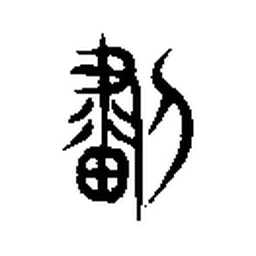
 InkSeal
Chinese character · HSK 2
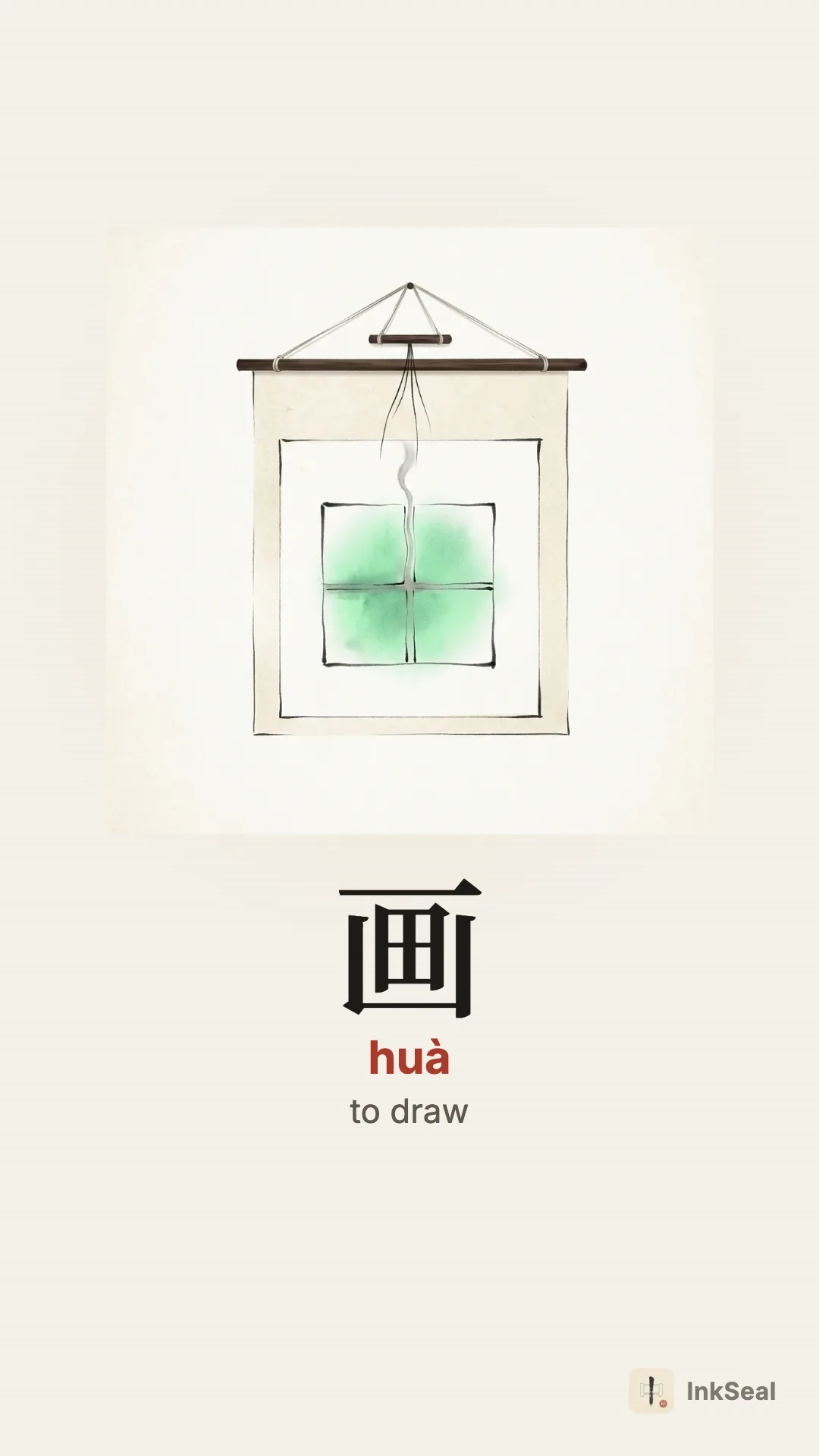
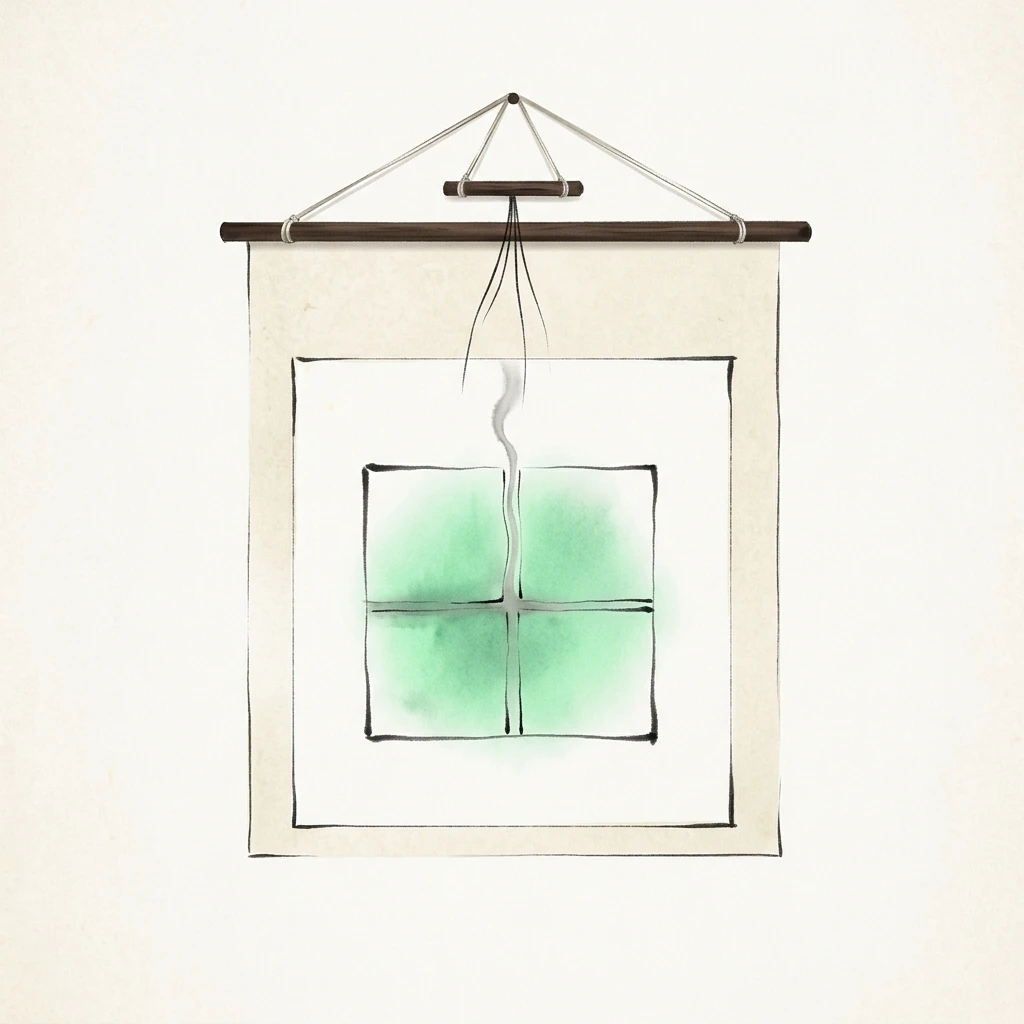
The simplified character visually resembles a framed painting or a hanging scroll, with the outer strokes acting as the frame and the inner '田' representing the artwork itself.
A beautiful picture (画) of a green field (田) is framed and hung on the wall.
Video mnemonic
See the visual story unfold, then connect it to the words and sentences below.
This set shows 画 as the action “to draw,” a picture, the art in “painter,” and an extended sense in screen images and animation.
huà huà · to draw; to draw pictures
我妹妹喜欢画画。
My younger sister likes drawing.
Usage note: The first 画 is the action “draw”; the second refers to what is drawn.
tú huà · picture; drawing
这幅图画很漂亮。
This picture is beautiful.
huà jiā · painter
她想当画家。
She wants to be a painter.
Usage note: Here 家 means a specialist or professional, not a home or family.
huà miàn · visual image; scene on a screen
电视画面很清楚。
The picture on the television is very clear.
Usage note: 画面 usually means the visual content of a screen, film shot, or scene, rather than a physical painting.
dòng huà piàn · animated film; cartoon
孩子们在看动画片。
The children are watching a cartoon.
Usage note: 动 suggests movement, 画 supplies the idea of pictures, and 片 makes the word an animated film.
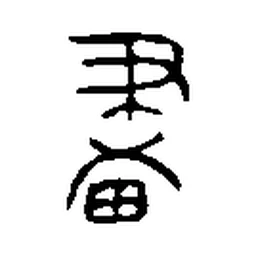
The traditional form (畫) originally depicted a hand holding a brush (聿) drawing the boundaries of a field (田). The simplified form (画) retains the field and the boundaries, looking like a framed picture.
These characters are close enough in shape to misread at speed. Telling them apart is a matter of spotting the one component that differs.
More characters: 看 (kàn, to look / to see) · 竹 (zhú, bamboo) · 策 (cè, strategy / plan) — or browse the full character library.