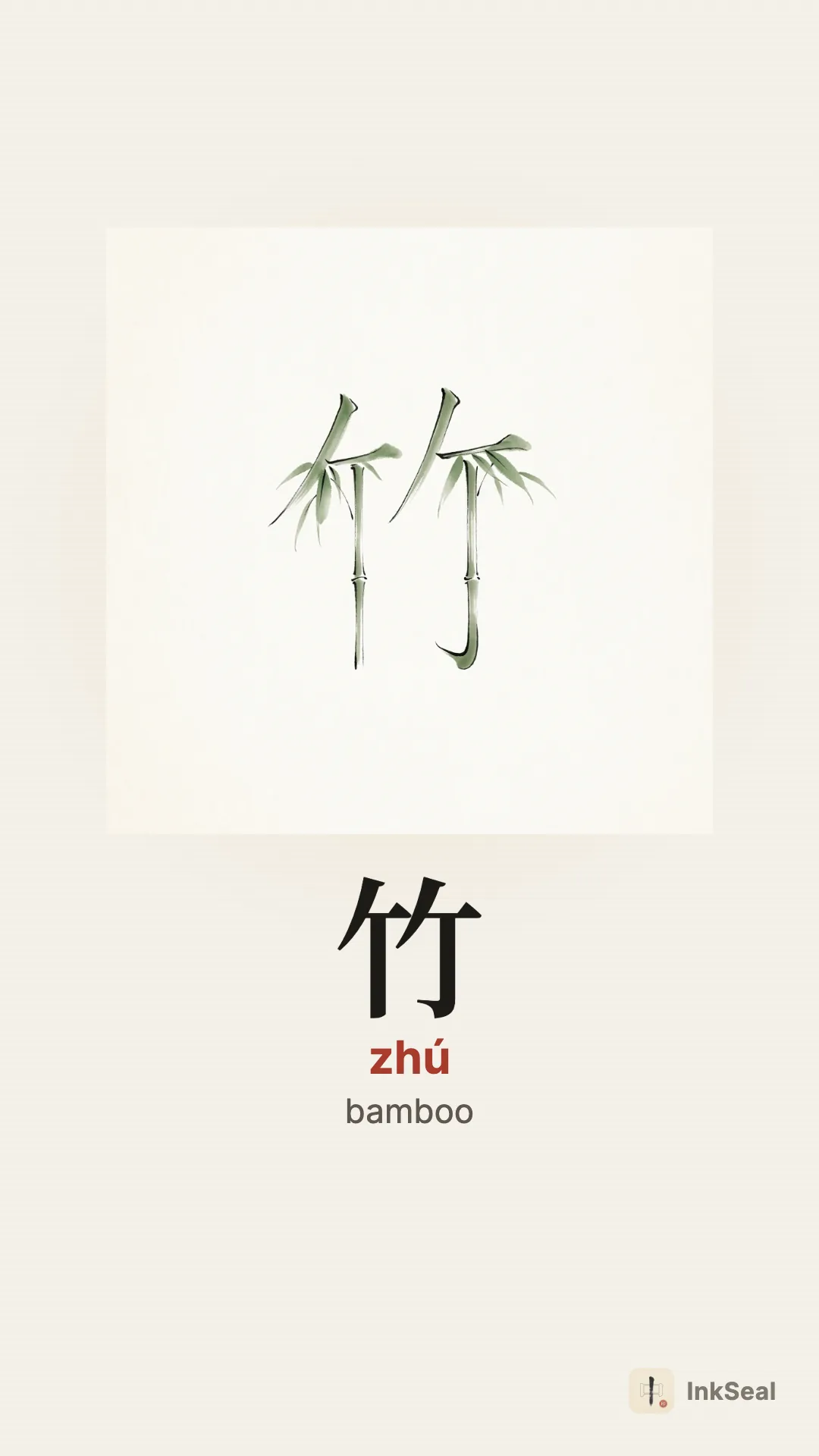
竹子
zhú zi · bamboo
这种竹子长得很快。
This kind of bamboo grows very quickly.
 InkSeal
Chinese character · HSK 5
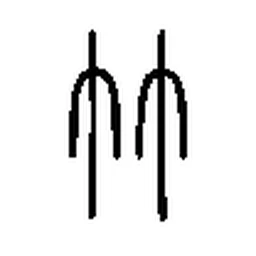
The character is a direct pictogram depicting two stalks of bamboo with drooping leaves.
Two graceful bamboo stalks standing side by side, their leaves drooping perfectly.
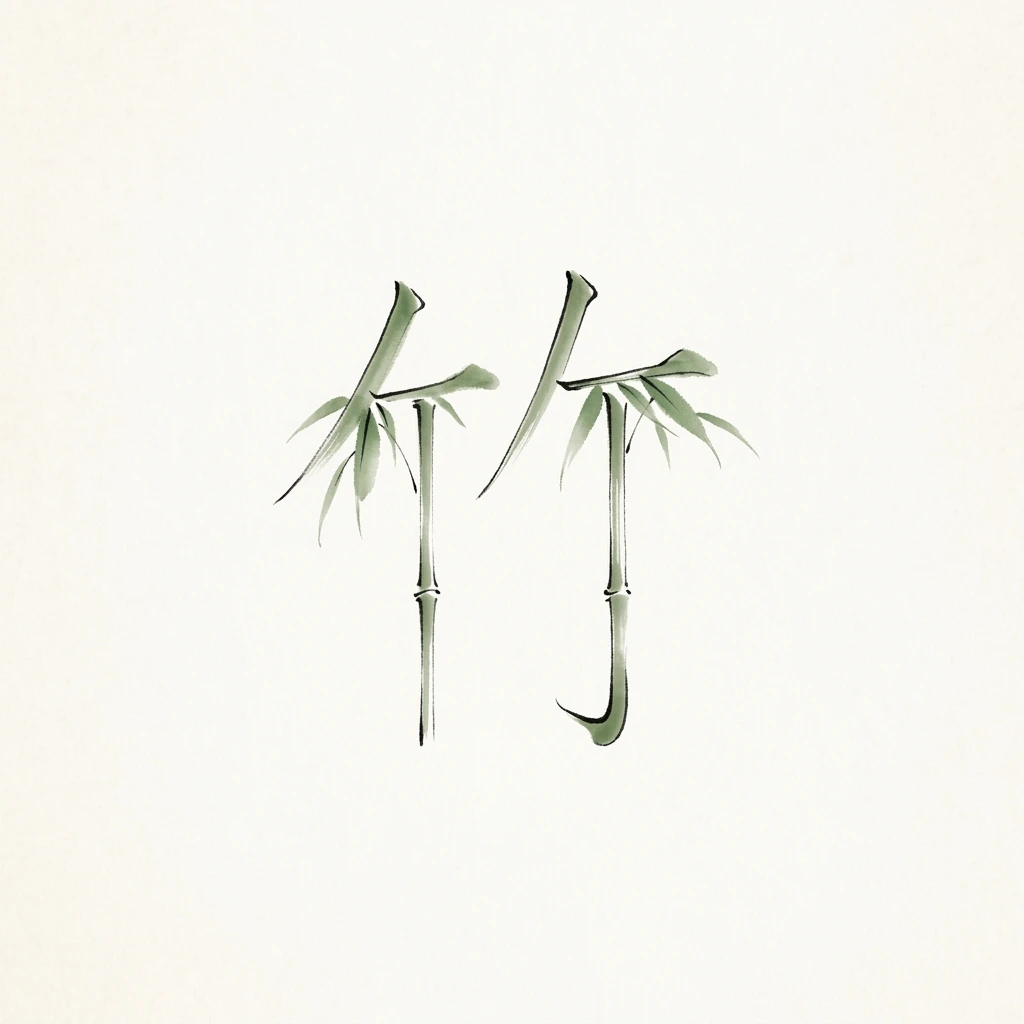
Video mnemonic
See the visual story unfold, then connect it to the words and sentences below.
竹 is read zhú throughout this set. It directly names bamboo in plants, places, and objects, while also appearing in a conventional noun and a fixed idiom.
zhú zi · bamboo
这种竹子长得很快。
This kind of bamboo grows very quickly.
zhú lín · bamboo forest or grove
村子后面有一片竹林。
There is a bamboo grove behind the village.
zhú lán · bamboo basket
她提着竹篮去买菜。
She carried a bamboo basket to buy groceries.
bào zhú · firecracker
春节时,孩子们喜欢放爆竹。
During the Spring Festival, children enjoy setting off firecrackers.
Usage note: Learn 爆竹 as the complete noun “firecracker,” not simply as bamboo that explodes.
xiōng yǒu chéng zhú · to have a clear plan and feel confident
他准备得很充分,早已胸有成竹。
He prepared thoroughly and already knew exactly what to do.
Usage note: Picture a finished bamboo image already in your mind. Use this expression when someone is well prepared and confident.
竹 (zhú, bamboo) and 笑 (xiào, to laugh or smile) confuse beginners because 笑 is wearing 竹 on its head: the bamboo radical ⺮ sits on top of 笑, so at first glance the character looks like bamboo with something extra underneath. The sounds are unrelated — zhú against xiào — so, as with many lookalikes, your eyes will mislead you long before your ears do. Learners often meet 笑 first in everyday phrases and only later realise bamboo was hiding there.
The bottom half settles it. On its own, 竹 is just the two bamboo stalks with their drooping leaves, and nothing below them. 笑 adds 夭 (yāo) underneath — picture a young person bending and shaking with laughter under the bamboo. Bamboo alone is the plant: 竹子 (zhú zi, bamboo) and 竹林 (zhú lín, bamboo forest or grove), as in 村子后面有一片竹林, “there is a bamboo grove behind the village.” If there is a figure laughing underneath, you are looking at a smile, not a stalk.
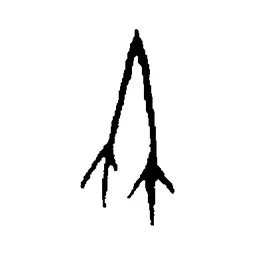
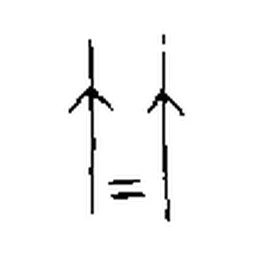
An ancient oracle bone pictogram that has remained remarkably consistent over millennia, originally drawing two bamboo stems with downward-pointing leaves to distinguish them from grass.
More characters: 策 (cè, strategy / plan) · 算 (suàn, to calculate / to compute) · 系 (xì / jì, system / to connect) — or browse the full character library.