犯罪
fàn zuì · to commit a crime; crime
他因犯罪被警察逮捕了。
He was arrested by the police for committing a crime.
 InkSeal
Chinese character · HSK 6
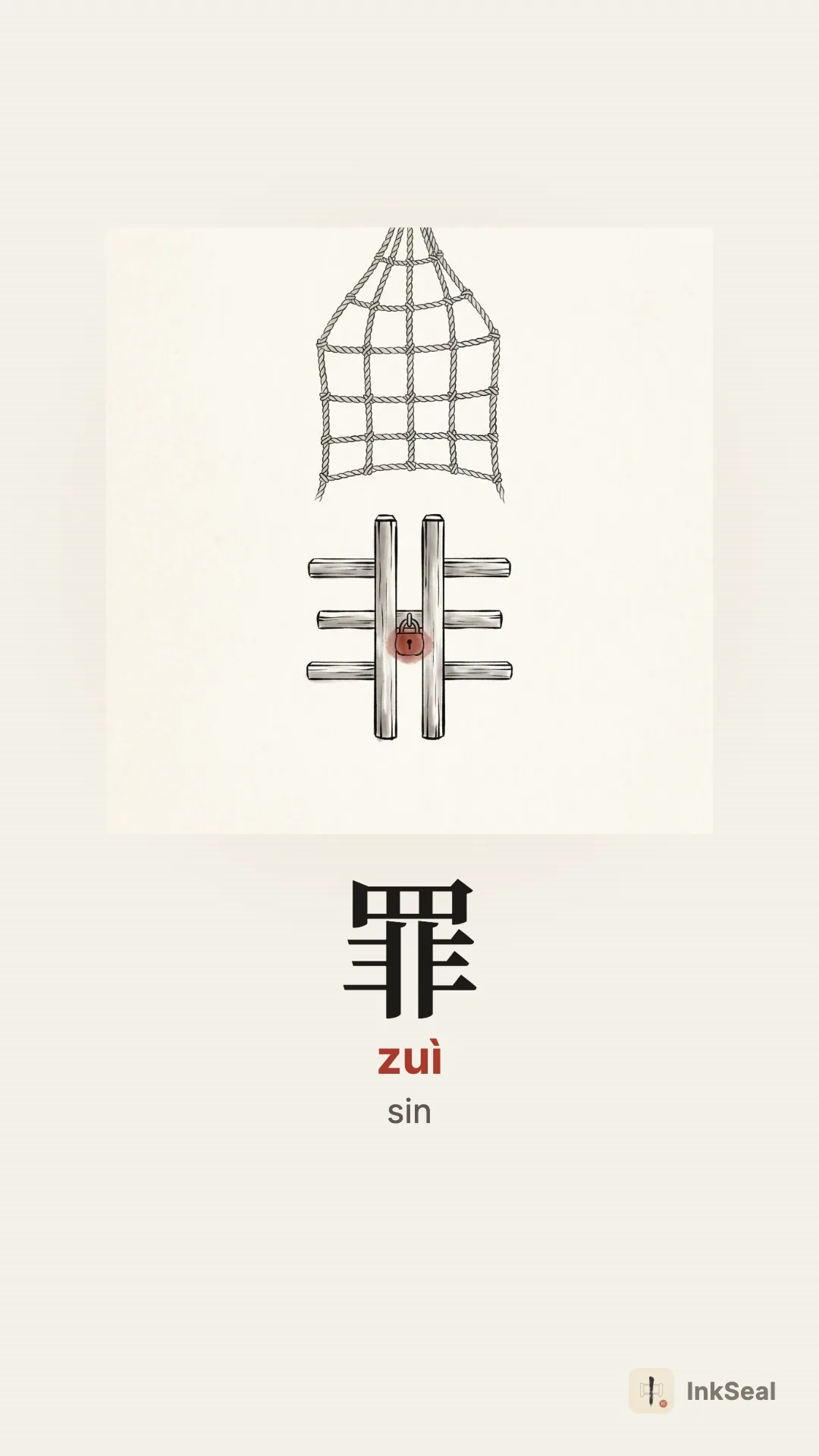
The character is composed of a net (罒) above and 'wrong' (非) below; representing the net of justice catching wrongdoers.
The net (罒) of justice falls upon those who do wrong (非), ensuring no crime escapes.
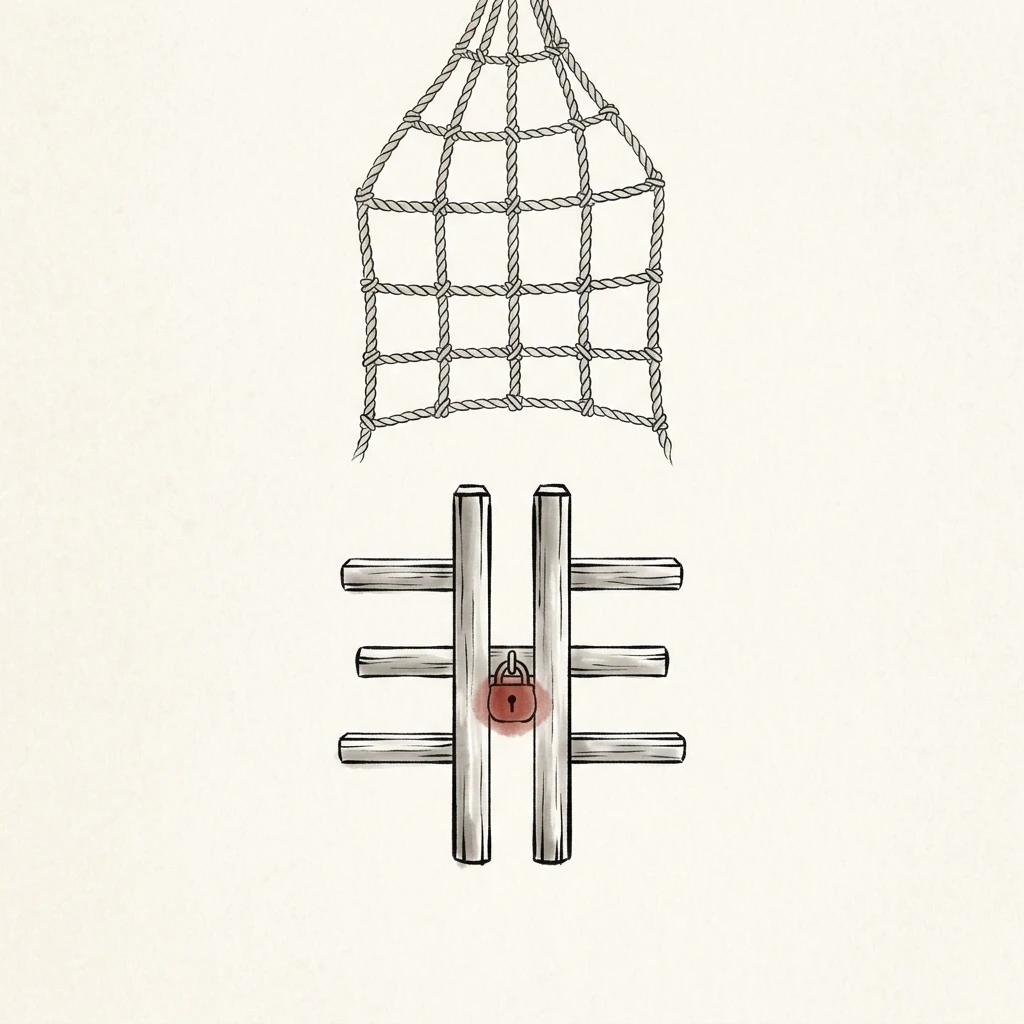
Video mnemonic
See the visual story unfold, then connect it to the words and sentences below.
罪 keeps its core sense of “crime” or “sin” in words about committing crimes, criminals, and moral evil; in 得罪, it forms the lexicalized verb “to offend” and is often unstressed.
fàn zuì · to commit a crime; crime
他因犯罪被警察逮捕了。
He was arrested by the police for committing a crime.
zuì fàn · criminal
警察很快抓住了那名罪犯。
The police quickly caught that criminal.
zuì è · evil; wickedness; sin
这部小说描写了战争中的罪恶。
This novel depicts the evils of war.
dé zui · to offend someone
我不是故意得罪你的。
I didn’t mean to offend you.
Usage note: In everyday speech, 罪 is often unstressed here and becomes neutral-tone zui. Learn 得罪 together as “to offend,” not literally as “to get a crime.”
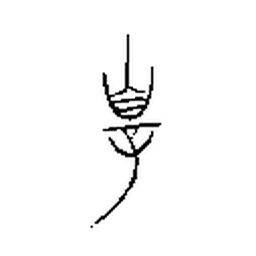
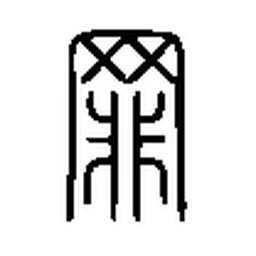
Originally written as 辠 (nose/self + bitter needle for tattooing criminals). Emperor Qin Shi Huang changed it to 罪 (net + wrong) because the original form looked too similar to his royal title '皇' (emperor).
More characters: 西 (xī, west) · 针 (zhēn, needle) · 问 (wèn, to ask) — or browse the full character library.