责任
zé rèn · responsibility or duty
照顾孩子是我们的责任。
Taking care of the child is our responsibility.
 InkSeal
Chinese character · HSK 3
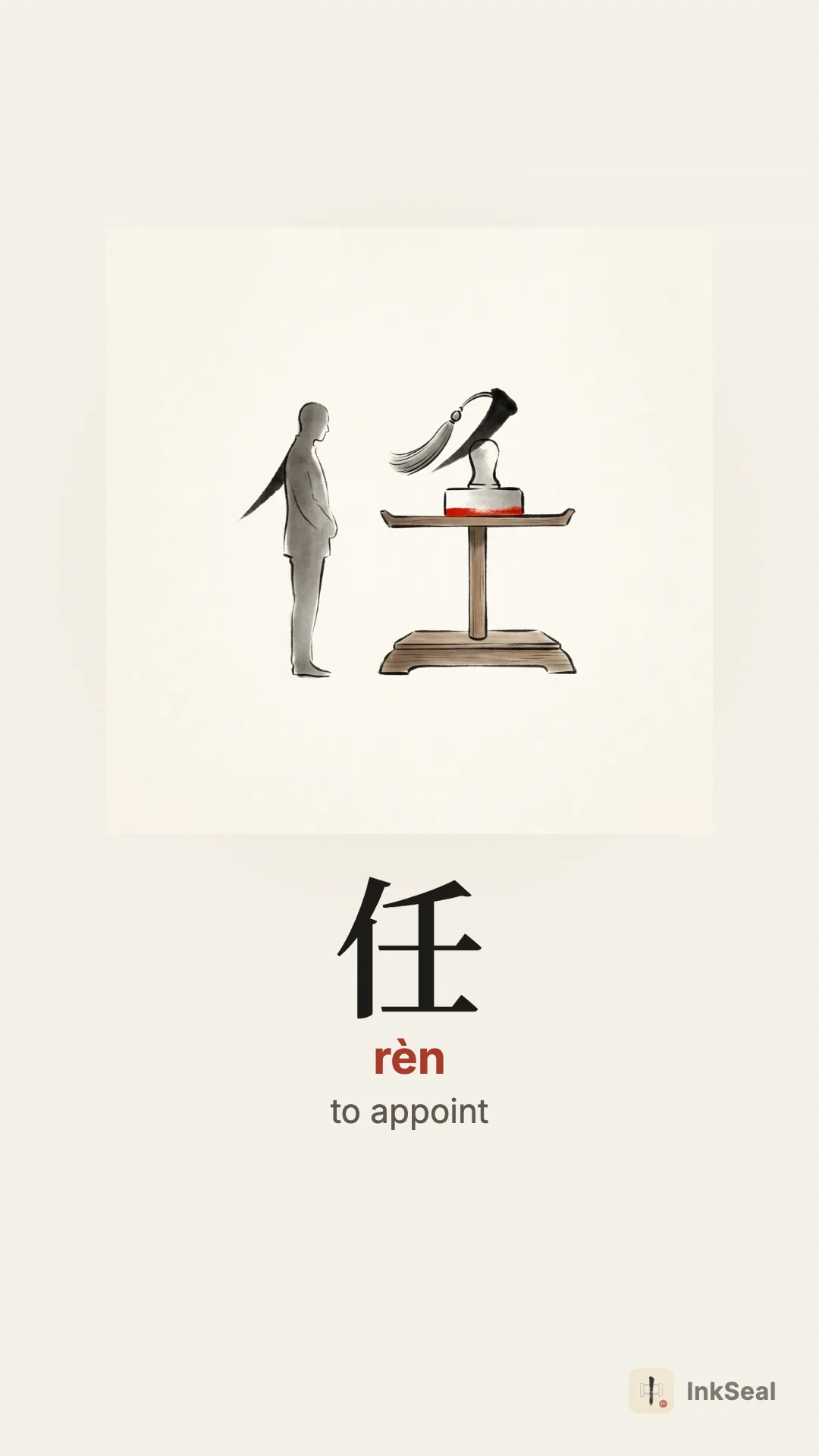
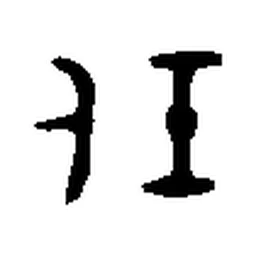
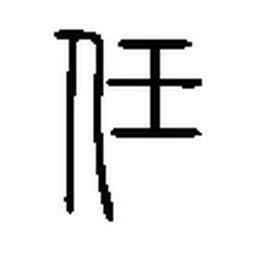
The character combines 'person' (亻) and 'burden/office' (壬), symbolizing a person taking on an official duty, mandate, or responsibility.
A person respectfully accepts the red seal of official appointment and heavy responsibility.
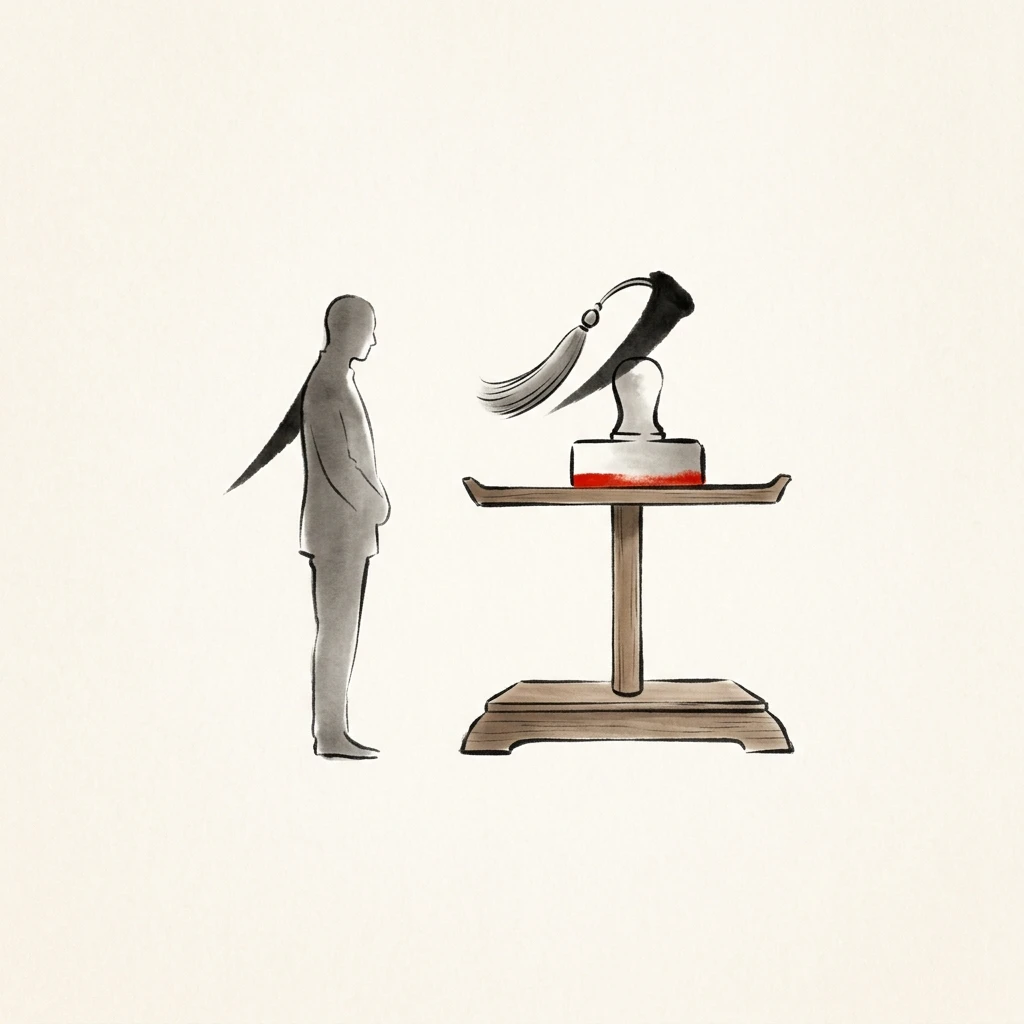
Video mnemonic
See the visual story unfold, then connect it to the words and sentences below.
This set shows 任 in its core senses of responsibility and appointment, then extends to tasks and the common word 任何, “any.”
zé rèn · responsibility or duty
照顾孩子是我们的责任。
Taking care of the child is our responsibility.
rèn mìng · to appoint
公司任命她为经理。
The company appointed her as manager.
dān rèn · to serve as or hold a position
她担任我们的中文老师。
She serves as our Chinese teacher.
rèn wu · a task or assignment
老师给了我们一个新任务。
The teacher gave us a new assignment.
rèn hé · any or whatever
我没有任何问题。
I don't have any questions.
Usage note: Use 任何 before a noun, as in 任何问题, “any questions.” Do not interpret 任 here as “appoint.”
任 (rèn, to appoint / responsibility) and 认 (rèn, to recognize / to know) are pronounced exactly the same — both rèn, with the same falling tone — so in listening and in pinyin input they are easy to swap. On the page they look less alike than they sound: 任 is a person (亻) beside 壬, with its stack of horizontal lines, while 认 is the speech radical (讠) beside a single 人. If you only learn the sound rèn, though, your eye has nothing to hold the two apart.
Use the left side as the cue. Speech on the left means 认 is about knowing and admitting: 认识 (rèn shi, to know or recognize someone) and 认真 (rèn zhēn, serious, earnest). A person on the left means 任 is about a person carrying a duty: 责任 (zé rèn, responsibility or duty), as in 照顾孩子是我们的责任, “taking care of the child is our responsibility.” If the word is about knowing, choose the speech radical; if it is about a job handed to someone, choose the person.
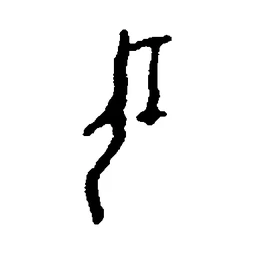
A phono-semantic compound where 亻 (person) provides the semantic context of human action, and 壬 (rén) provides the pronunciation while also historically implying a person carrying a heavy load or burden.
More characters: 休 (xiū, to rest) · 伞 (sǎn, umbrella) · 供 (gòng / gōng, to offer / to provide) — or browse the full character library.