提供
tí gōng · to provide; to offer
这家酒店提供免费早餐。
This hotel provides free breakfast.
 InkSeal
Chinese character · HSK 4
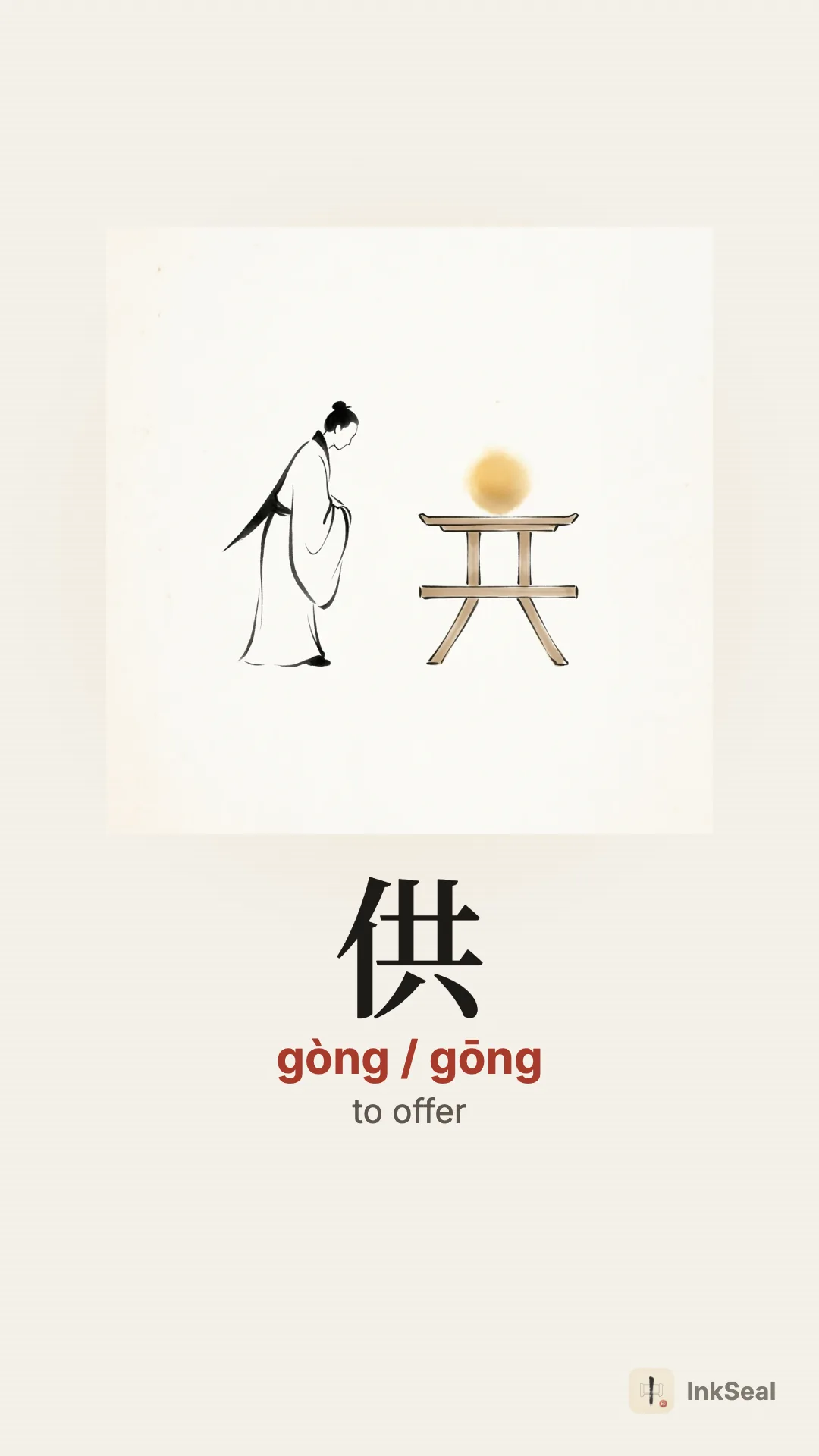
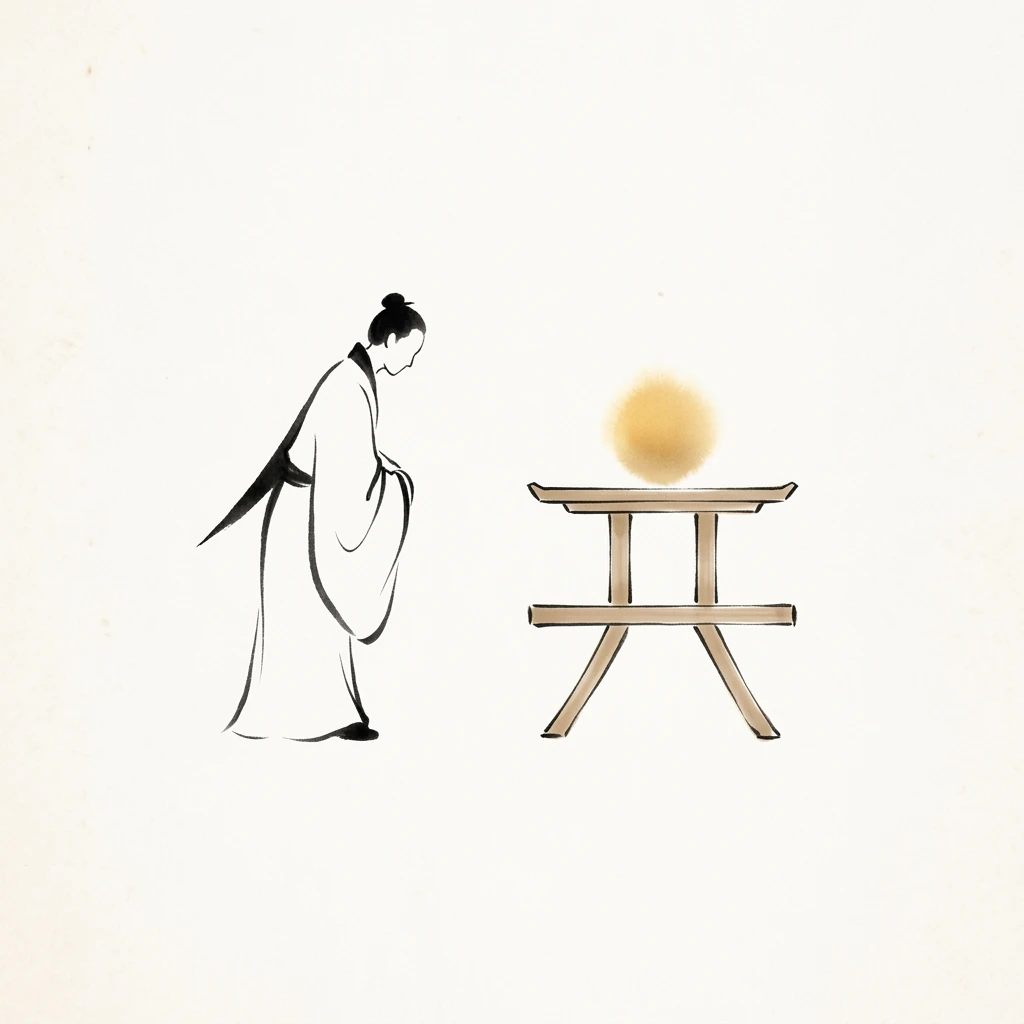
The character combines '亻' (person) and '共' (which acts phonetically but structurally resembles an offering stand or two hands presenting items), visually depicting a person making a respectful offering.
A person (亻) respectfully presents a precious offering on a stand (共).
Video mnemonic
See the visual story unfold, then connect it to the words and sentences below.
供 is read gōng in words about supplying something and gòng in 供品, an offering used in worship.
tí gōng · to provide; to offer
这家酒店提供免费早餐。
This hotel provides free breakfast.
gōng yìng · to supply
这家公司向学校供应电脑。
This company supplies computers to schools.
Usage note: 提供 is broader, while 供应 often emphasizes maintaining a supply of goods, energy, or services.
gōng nuǎn · to provide heating; heating supply
这栋楼冬天统一供暖。
This building has centralized heating in winter.
gōng bù yìng qiú · for supply to fall short of demand
这种新药现在供不应求。
Demand for this new medicine currently exceeds supply.
Usage note: Use this fixed expression when there is not enough of something to satisfy demand.
gòng pǐn · an offering presented in worship
他们准备了水果作为供品。
They prepared fruit as offerings.
Usage note: Here 供 is read gòng because it refers to something offered in worship rather than an ordinary supply.
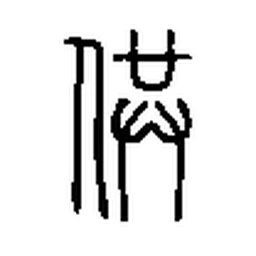
A phono-semantic compound where '亻' (person) provides the meaning and '共' (together/offer) provides the sound, while historically '共' itself depicted two hands holding an offering vessel.
These characters are close enough in shape to misread at speed. Telling them apart is a matter of spotting the one component that differs.
More characters: 具 (jù, tool / device) · 册 (cè, book / volume) · 卖 (mài, to sell) — or browse the full character library.