送给
sòng gěi · to give as a present
这是我送给你的礼物。
This is the gift I gave you.
 InkSeal
Chinese character · HSK 1
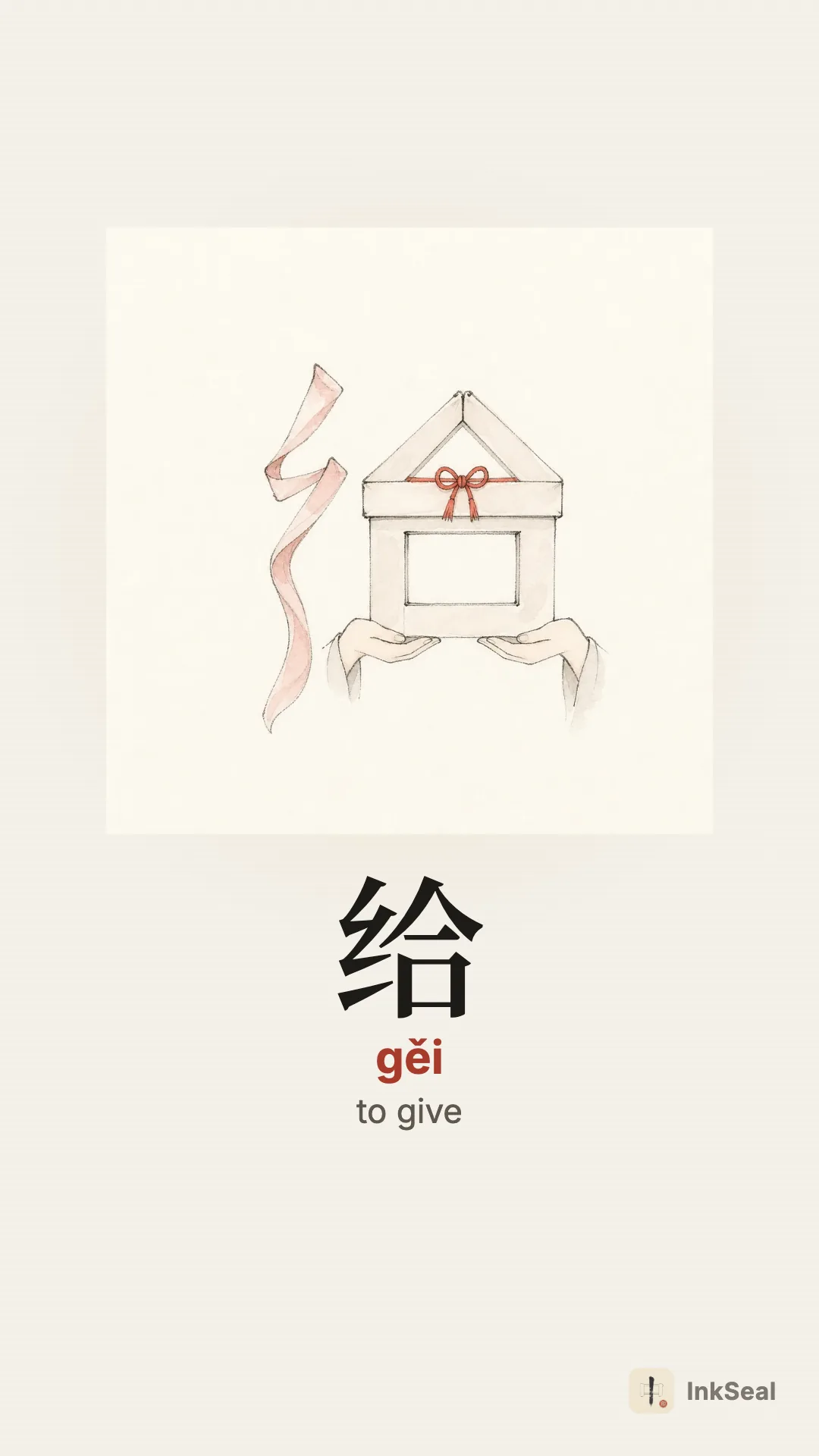
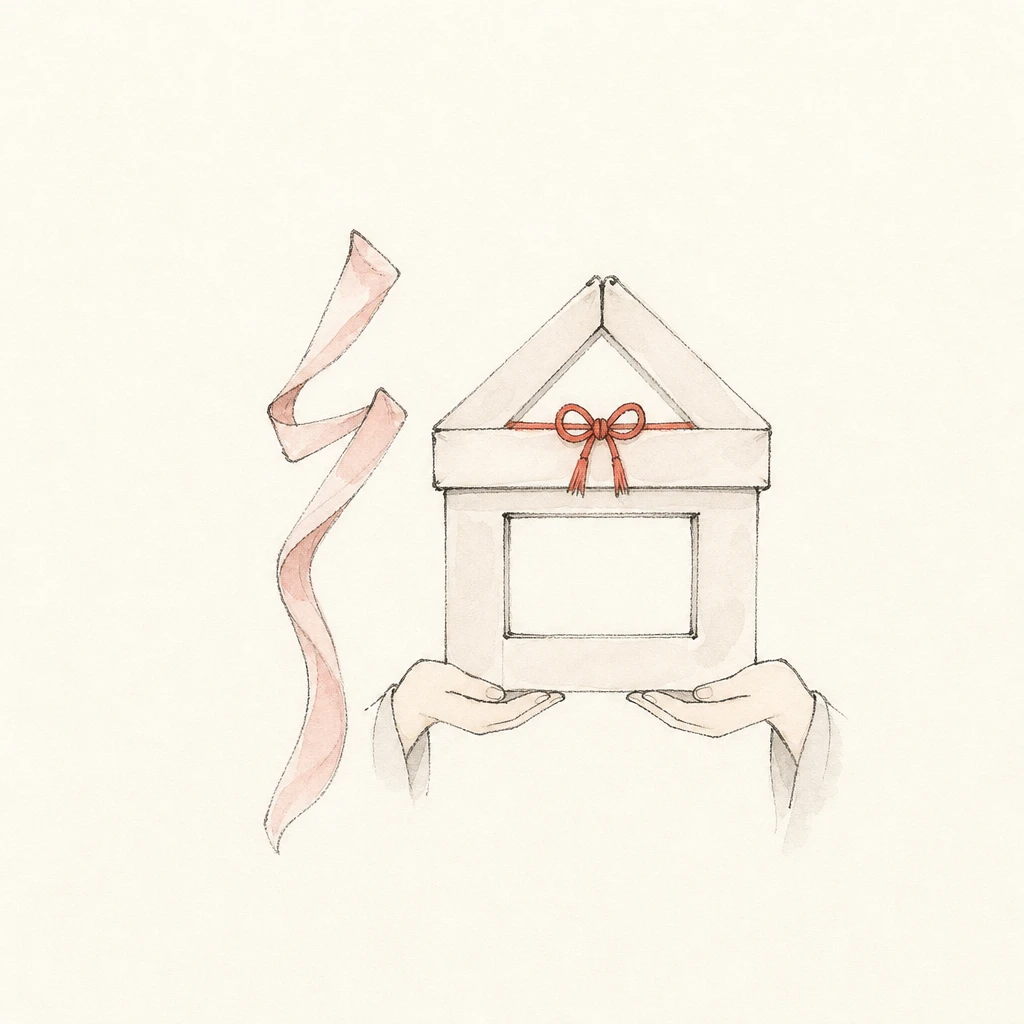
给 is a phono-semantic character: 纟 suggests silk/thread and 合 gives the sound. Turning 纟 into a ribbon that wraps a 合-shaped present ties the structure to the meaning “to give.”
A silk ribbon 纟 wraps a closed 合-shaped gift: here, I give it to you.
Video mnemonic
See the visual story unfold, then connect it to the words and sentences below.
Also watch on Instagram.
给 is usually read gěi in words about giving, handing something to someone, or marking a recipient. In the formal verb 给予, it takes the alternate reading jǐ.
sòng gěi · to give as a present
这是我送给你的礼物。
This is the gift I gave you.
jiāo gěi · to hand over to someone
请把表格交给老师。
Please hand the form to the teacher.
huán gěi · to return something to someone
看完以后,请把书还给我。
After you finish reading it, please return the book to me.
Usage note: Here 还 is huán, “return,” not hái, “still.”
gěi · to; for, marking the recipient of an action
我给妈妈打了一个电话。
I called my mother.
Usage note: Here 给 introduces the person receiving the call; it is not the main verb “give.”
jǐ yǔ · to give; to provide (formal)
学校给予他很多帮助。
The school provides him with a lot of support.
Usage note: In the formal verb 给予, 给 is read jǐ and means “provide,” rather than taking its everyday reading gěi.
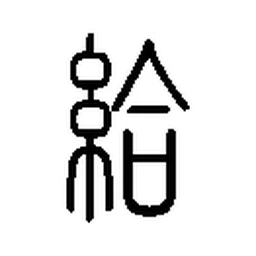
Originally a phono-semantic compound where '纟' (silk) indicated providing materials and '合' provided the sound (jǐ); over time, it evolved into the most common verb for 'to give' (gěi).
More characters: 罪 (zuì, sin / crime) · 西 (xī, west) · 针 (zhēn, needle) — or browse the full character library.