工具
gōng jù · tool; an object used to do work
这个工具很实用。
This tool is very practical.
 InkSeal
Chinese character · HSK 3
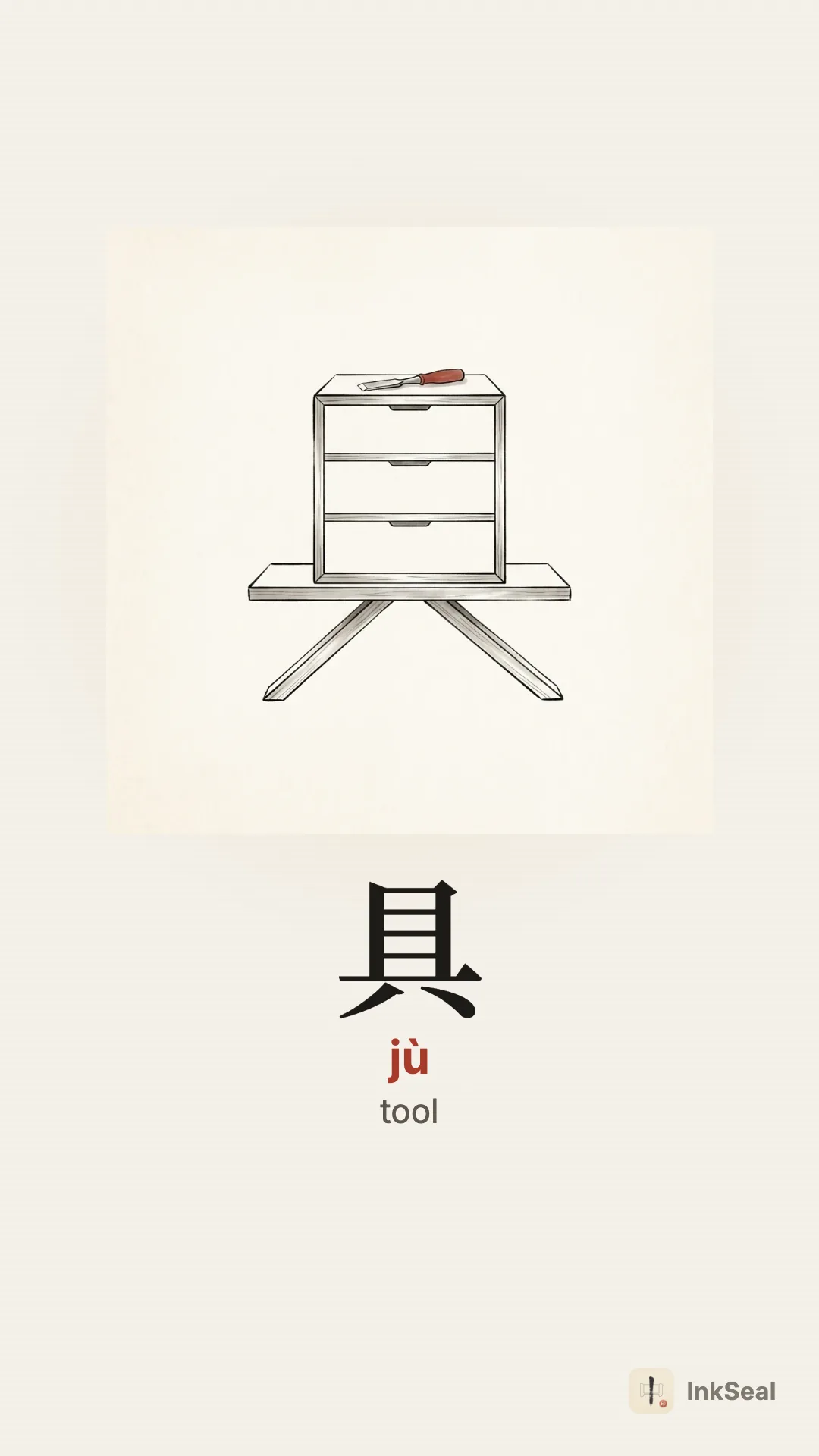
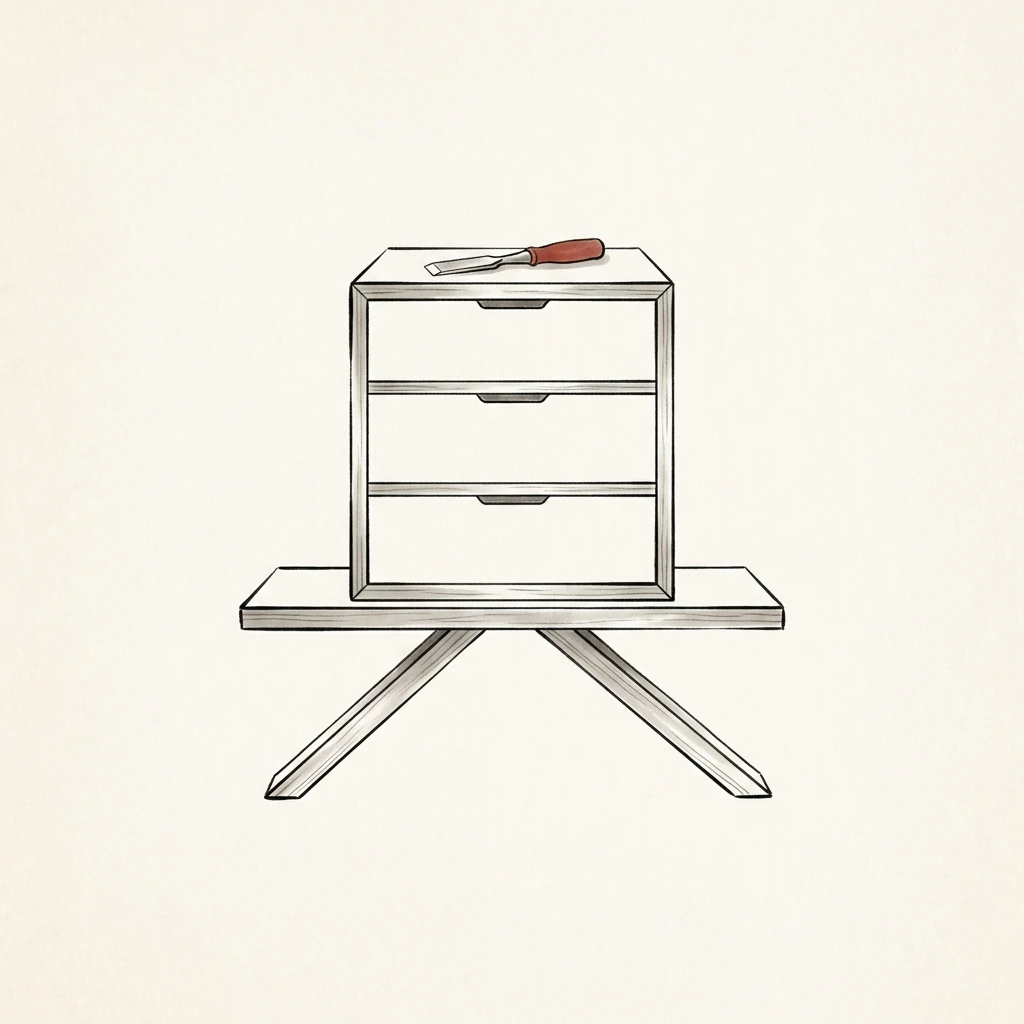
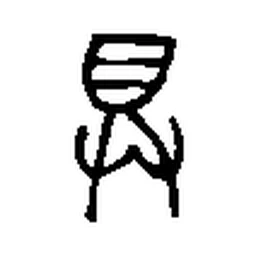
Visually, the character resembles a tall, multi-drawer tool cabinet (the top box with horizontal strokes) resting securely on a wooden stand with two legs (the bottom 八).
A wooden tool cabinet with three drawers sits on two sturdy legs.
Video mnemonic
See the visual story unfold, then connect it to the words and sentences below.
This set shows 具 first in names for useful objects, then in the abstract senses “to possess” and “specific.”
gōng jù · tool; an object used to do work
这个工具很实用。
This tool is very practical.
wán jù · toy; an object used for play
孩子正在收拾玩具。
The child is putting away the toys.
jiā jù · furniture; useful objects for a home
我们需要买一些家具。
We need to buy some furniture.
Usage note: 家具 is a collective noun, so it normally does not take 个 for one item.
jù yǒu · to possess or have a quality
这份工作具有挑战性。
This job is challenging.
Usage note: 具有 is more formal than 有 and is often used with qualities, features, or importance.
jù tǐ · specific; concrete rather than general
请告诉我具体时间。
Please tell me the specific time.
Usage note: Use 具体 when asking for exact details rather than a general idea.
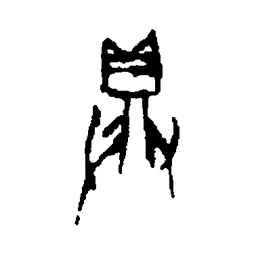
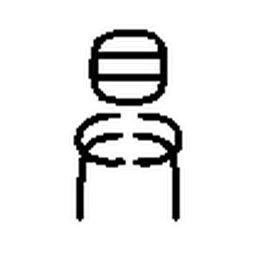
Originally an ideogram showing two hands (now simplified to the bottom 八) holding a bronze cauldron (now simplified to the top box), representing the possession of valuable utensils or tools.
More characters: 册 (cè, book / volume) · 卖 (mài, to sell) · 史 (shǐ, history / annals) — or browse the full character library.