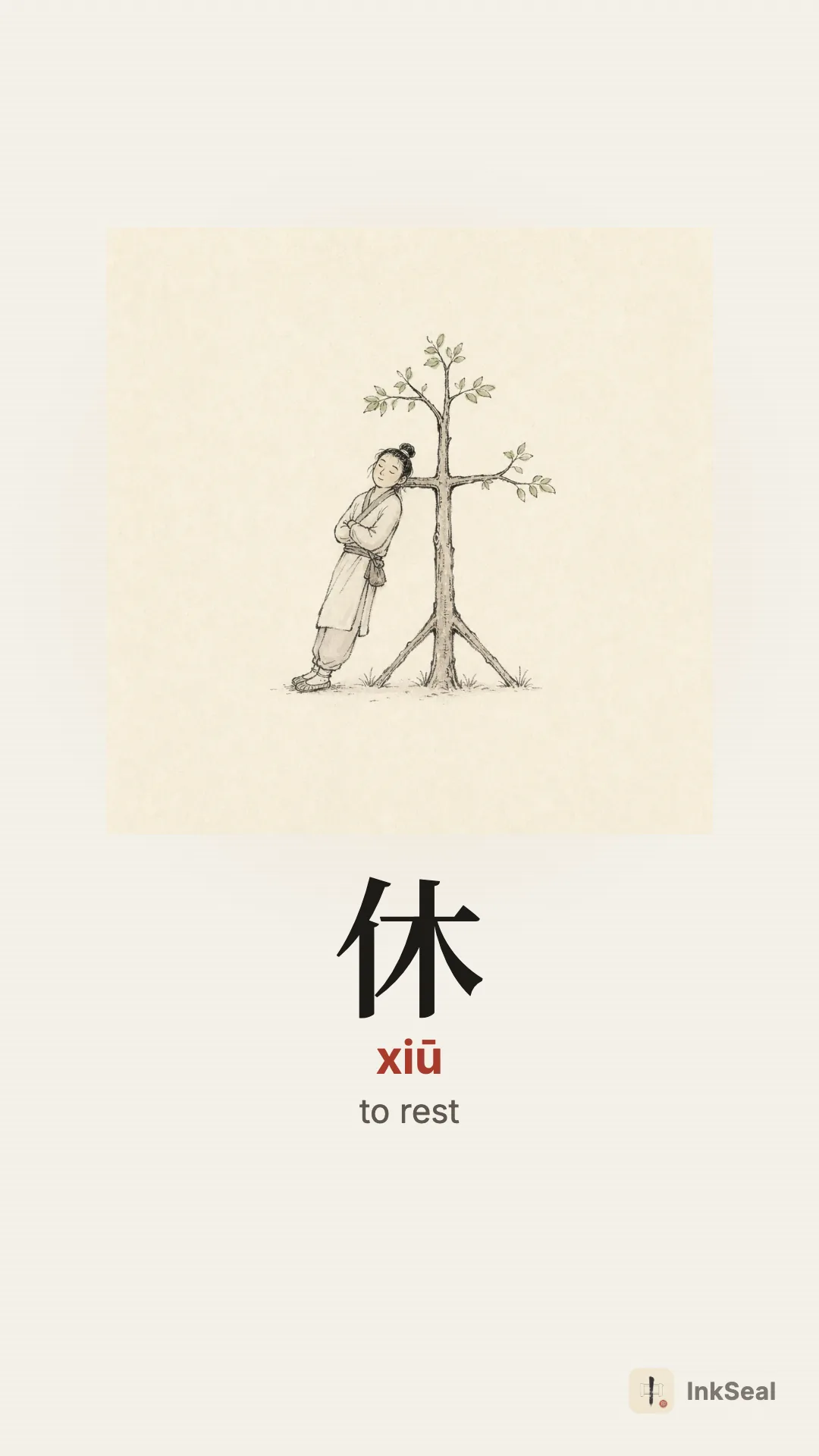
休息
xiū xi · to rest
我想休息一下。
I want to rest for a while.
 InkSeal
Chinese character · HSK 1
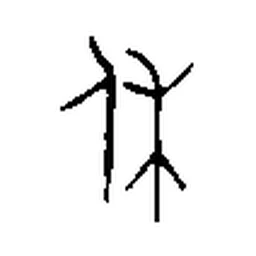
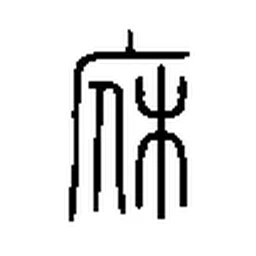
休 is an associative compound: a person beside a tree. The picture turns the two components into a tiny scene of someone leaning on a tree to rest.
A person beside a tree takes a rest: 休.
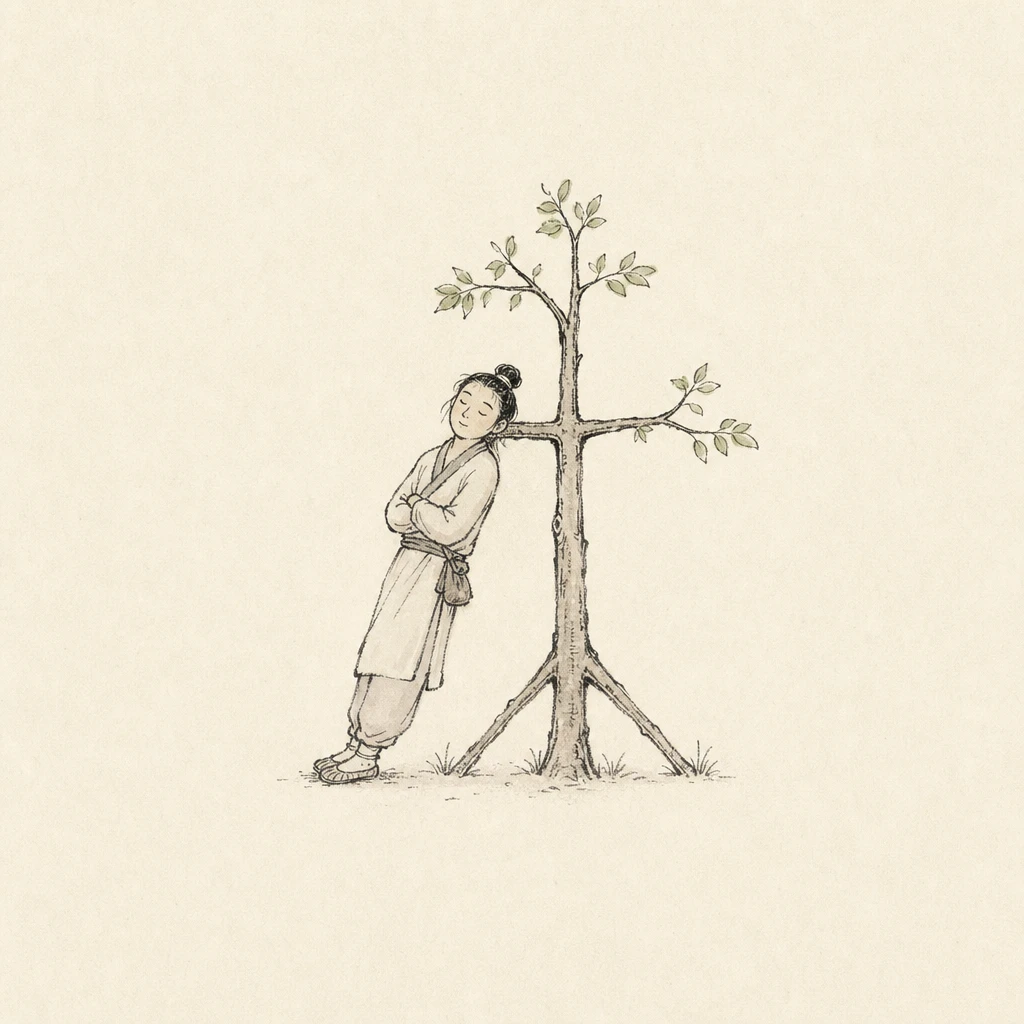
Video mnemonic
See the visual story unfold, then connect it to the words and sentences below.
Also watch on Instagram.
In these words, 休 keeps the reading xiū and develops from resting into taking leave, retiring, and enjoying leisure time.
xiū xi · to rest
我想休息一下。
I want to rest for a while.
xiū jià · to take leave; to be on vacation
他下周要休假。
He is taking leave next week.
Usage note: Here 假 is jià, meaning “leave” or “holiday,” not jiǎ, meaning “fake.”
tuì xiū · to retire from work
我爸爸明年退休。
My father will retire next year.
Usage note: Unlike a short rest, this usually means permanently leaving working life.
xiū xián · leisure; to relax
这里很适合休闲。
This is a good place to relax.
A classic associative compound (会意) created by combining 'person' and 'tree' to depict a common resting scenario.
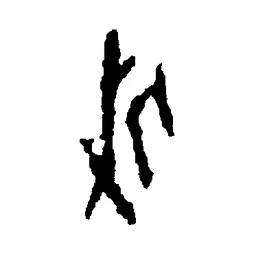
More characters: 伞 (sǎn, umbrella) · 供 (gòng / gōng, to offer / to provide) · 具 (jù, tool / device) — or browse the full character library.