雨伞
yǔ sǎn · umbrella; rain umbrella
外面下雨,别忘了带雨伞。
It’s raining outside, so don’t forget to take an umbrella.
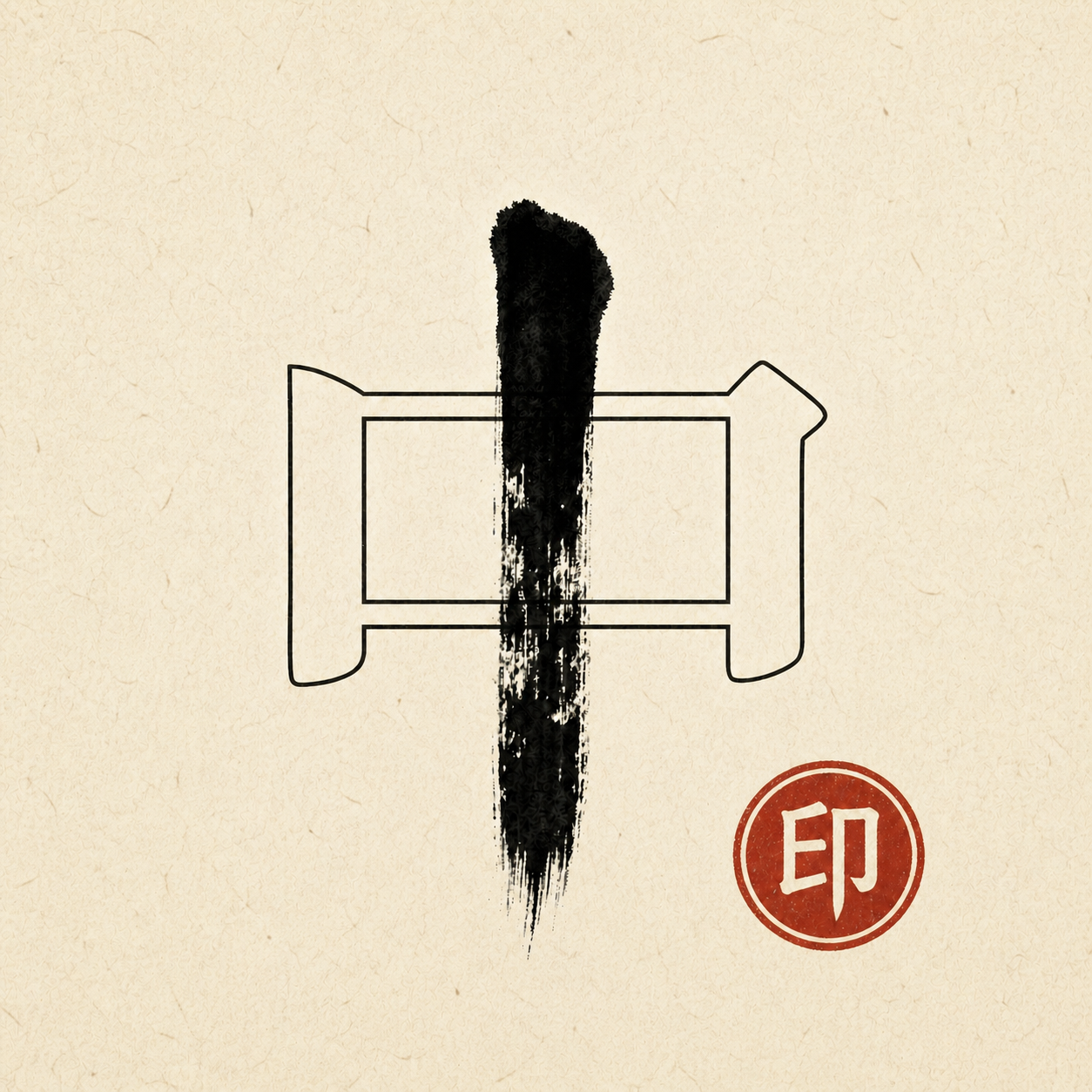 InkSeal
Chinese character · HSK 4
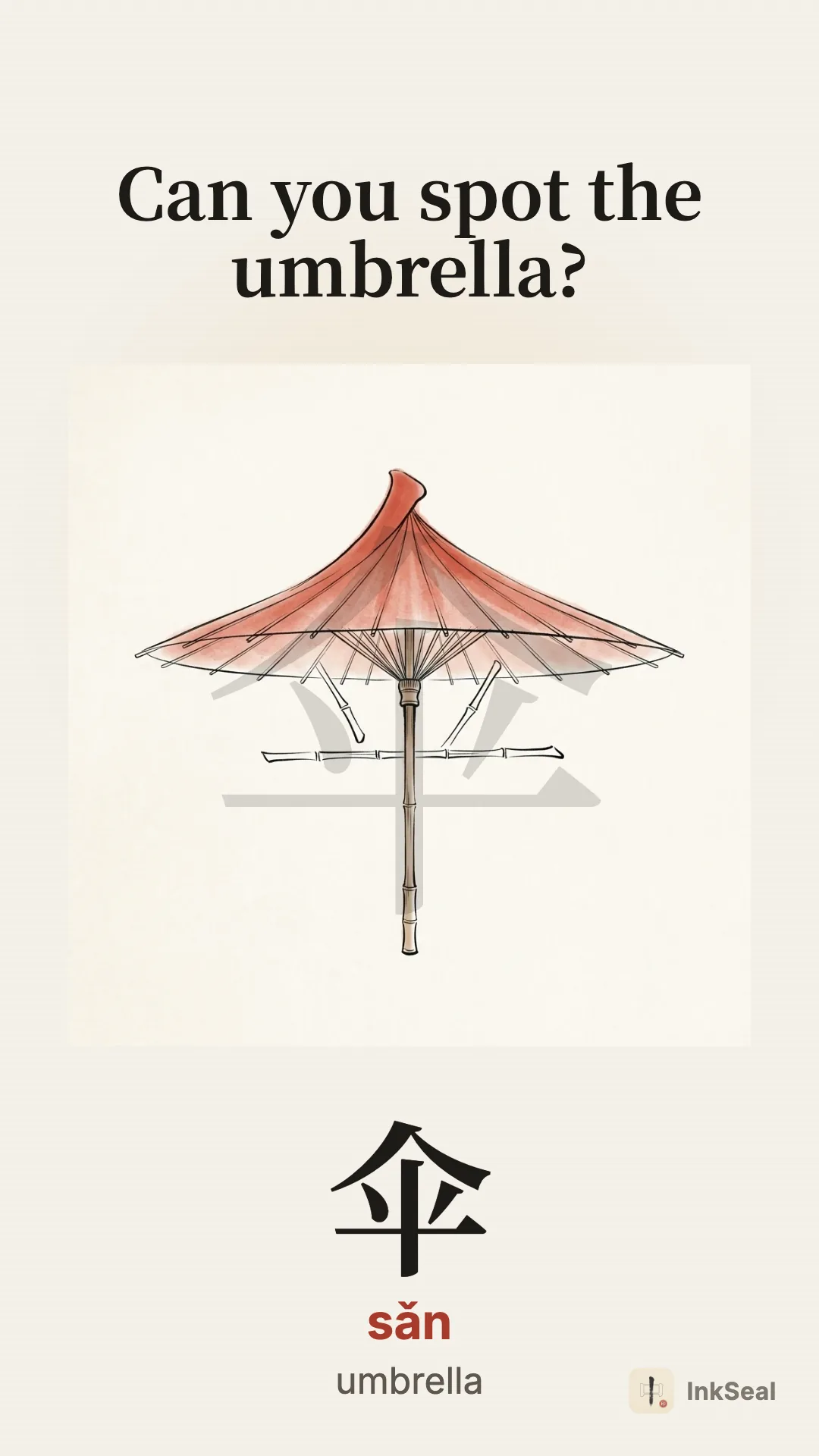
The simplified character is a direct pictograph of an open umbrella, with the top representing the canopy, the middle strokes representing the ribs, and the vertical line acting as the handle.
The wide canopy (人) and wooden ribs perfectly form the shape of an open umbrella.
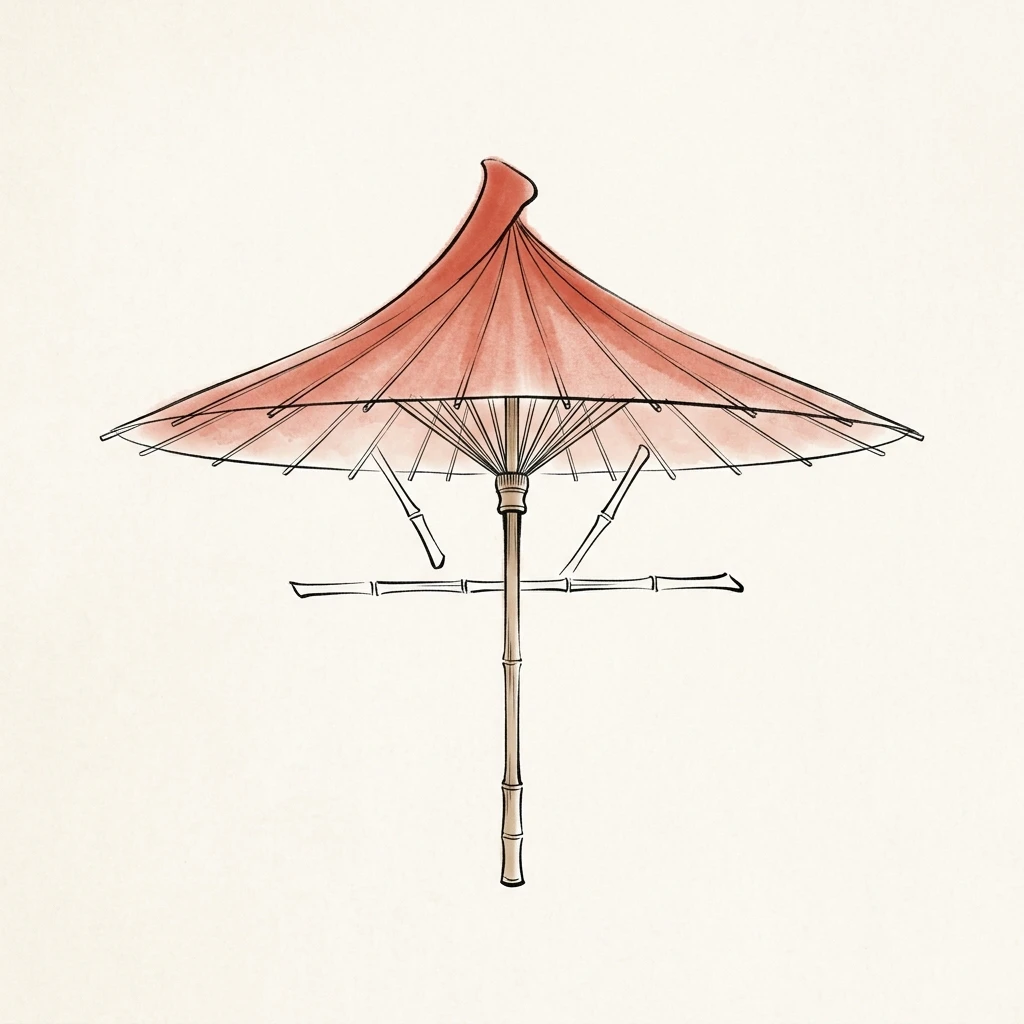
Video mnemonic
See the visual story unfold, then connect it to the words and sentences below.
伞 means “umbrella” in everyday compounds and extends to the umbrella-like parachute in words about parachuting.
yǔ sǎn · umbrella; rain umbrella
外面下雨,别忘了带雨伞。
It’s raining outside, so don’t forget to take an umbrella.
chēng sǎn · to hold up an umbrella
下雨时,她为孩子撑伞。
When it rains, she holds an umbrella over the child.
jiàng luò sǎn · parachute
飞行员打开了降落伞。
The pilot opened the parachute.
Usage note: A parachute resembles an open umbrella, which makes the extended sense easy to remember.
tiào sǎn · to go parachuting; parachuting
我想试一次跳伞。
I want to try parachuting once.
Usage note: Learn this as the usual verb for recreational or emergency parachuting, not as “jump with an umbrella.”
The traditional character '傘' depicted four little '人' (people) taking shelter underneath a large canopy. The simplified form '伞' elegantly strips the image down to the bare mechanical frame of a single umbrella.
These characters are close enough in shape to misread at speed. Telling them apart is a matter of spotting the one component that differs.
More characters: 供 (gòng / gōng, to offer / to provide) · 具 (jù, tool / device) · 册 (cè, book / volume) — or browse the full character library.