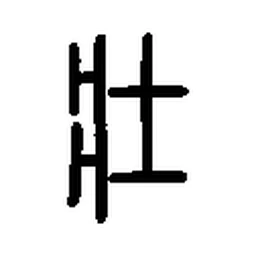
强壮
qiáng zhuàng · strong; robust; sturdy
他身体很强壮。
He is physically strong.
 InkSeal
Chinese character · HSK 6
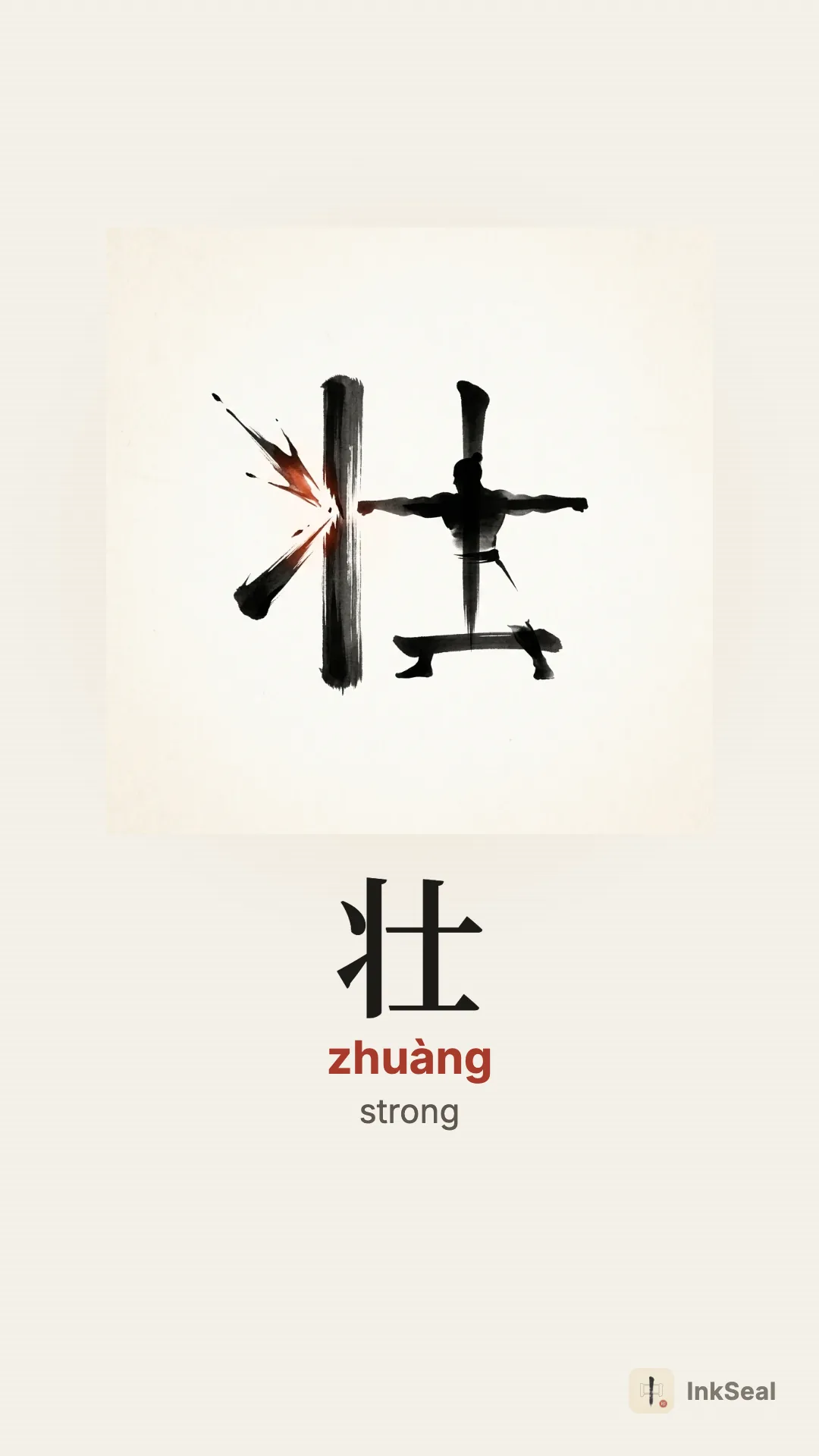
The character combines '丬' (a piece of split wood) and '士' (a warrior or strong man), visually conveying the idea of a robust warrior whose sheer strength can splinter heavy wood.
A strong warrior (士) strikes the wooden post so hard that splinters fly off (丬).
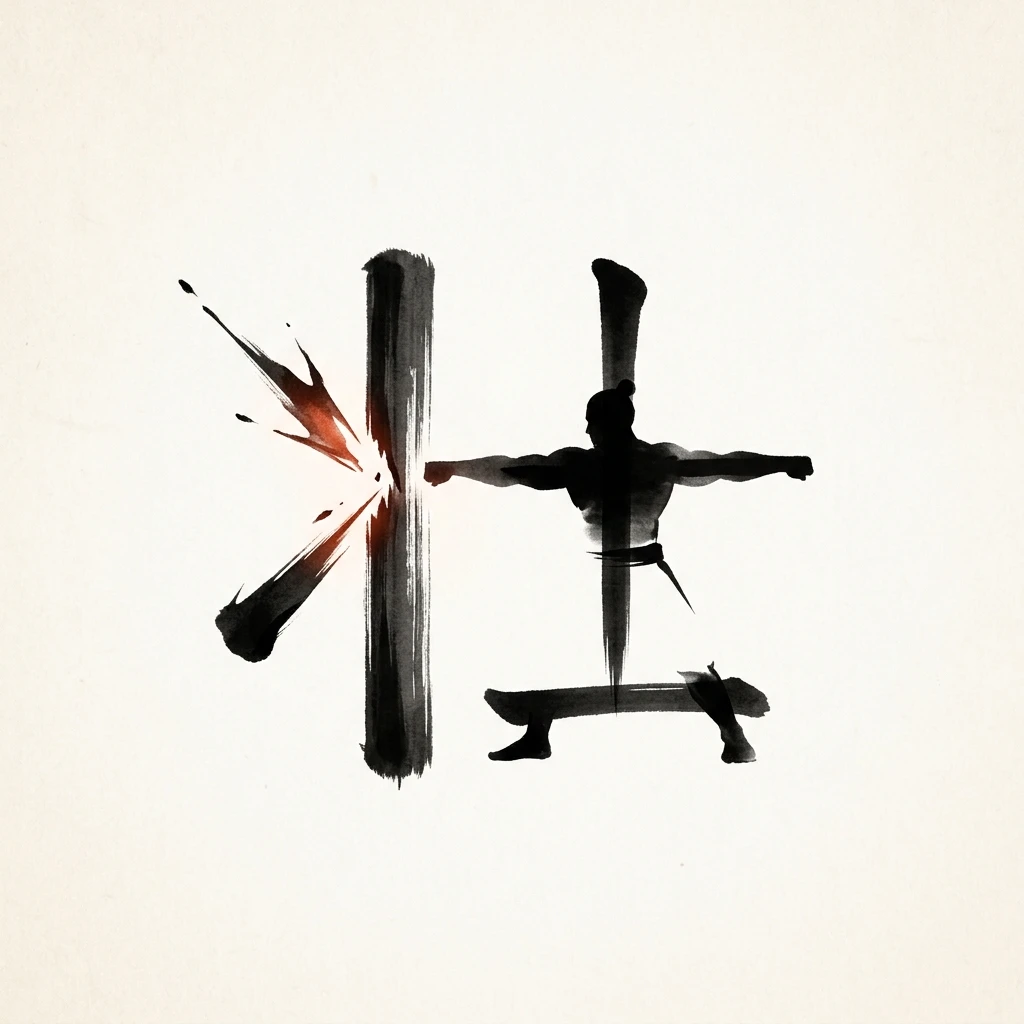
Video mnemonic
See the visual story unfold, then connect it to the words and sentences below.
This set shows 壮 moving from physical strength to growth, impressive scale, courage, and confident force in a fixed expression.
qiáng zhuàng · strong; robust; sturdy
他身体很强壮。
He is physically strong.
zhuàng dà · to grow stronger or larger; to strengthen
这家公司正在不断壮大。
This company is steadily growing stronger.
Usage note: It often describes an organization, business, or force becoming larger and stronger.
zhuàng guān · spectacular; magnificent
山顶的景色非常壮观。
The view from the mountaintop is spectacular.
Usage note: Here, the idea of strength extends to something visually powerful and impressive.
zhuàng dǎn · to bolster someone’s courage
她请朋友陪她去壮胆。
She asked a friend to go with her to bolster her courage.
Usage note: Use it when something or someone helps a person feel braver before a difficult situation.
lǐ zhí qì zhuàng · confident and forceful because one believes one is right
因为证据很清楚,他说得理直气壮。
Because the evidence was clear, he spoke with complete confidence in being right.
Usage note: Learn the four-character expression as a unit; it implies confidence backed by reason or justice, not mere loudness.
Historically a phono-semantic compound: '士' (warrior/man) provides the meaning of physical robustness, while '爿' (split wood, now simplified to '丬') provides the phonetic pronunciation.
More characters: 壶 (hú, pot / kettle) · 夹 (jiā, to clip / to squeeze) · 妈 (mā, mother / mom) — or browse the full character library.