妈妈
mā ma · mom; mother
我妈妈今天不上班。
My mom is not working today.
 InkSeal
Chinese character · HSK 1
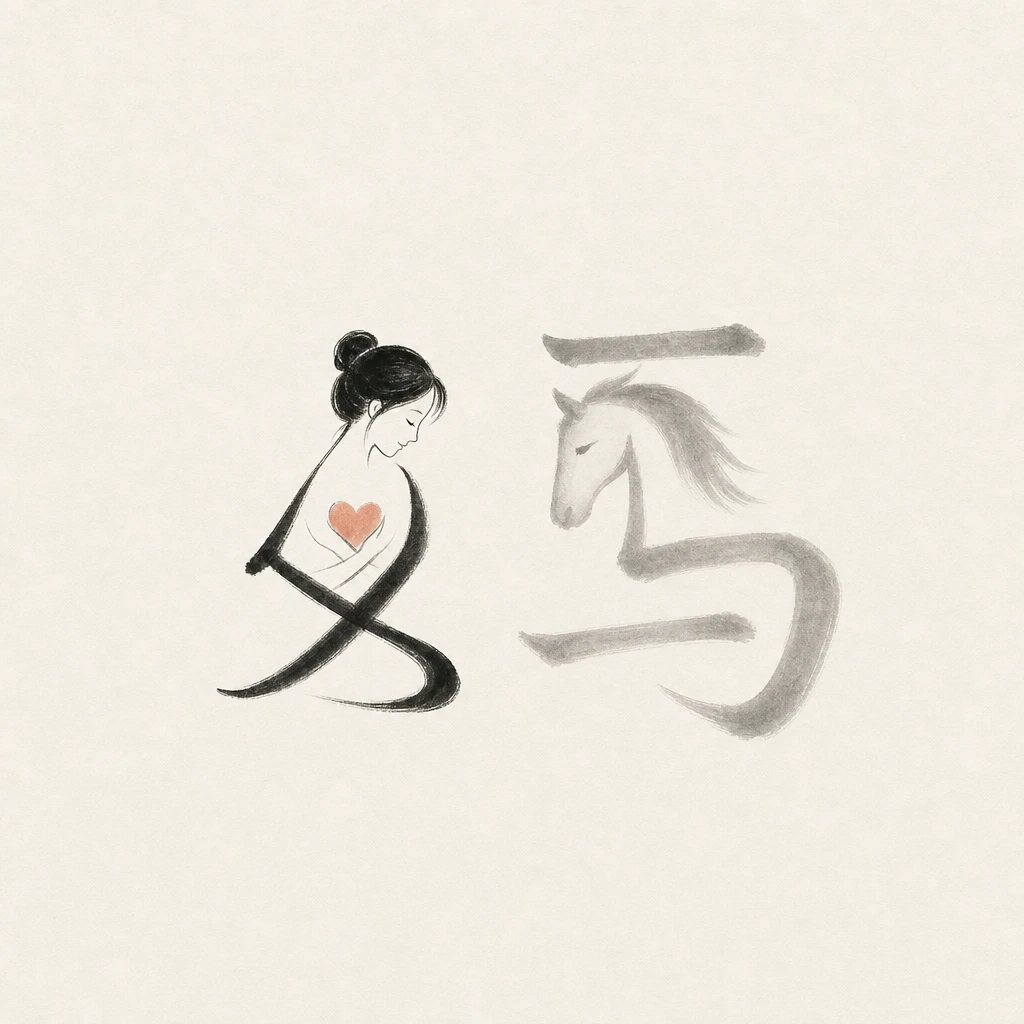
The character combines '女' (woman) for meaning and '马' (horse, pronounced mǎ) for sound.
Focus on the nurturing woman (女) for the meaning of mother, while the faint horse (马) simply echoes the sound 'ma'.
This set shows 妈 in the direct word for “mom” and in conventional terms for a maternal aunt and an older woman.
mā ma · mom; mother
我妈妈今天不上班。
My mom is not working today.
yí mā · maternal aunt; mother's sister
我姨妈住在上海。
My maternal aunt lives in Shanghai.
Usage note: This specifically refers to an aunt on your mother’s side.
dà mā · auntie; middle-aged or older woman
那位大妈在买菜。
That older woman is buying groceries.
Usage note: This familiar term is often used for a middle-aged or older woman, even when she is not a relative.
A phono-semantic compound: '女' (woman) indicates the meaning (female relation), while '马' (horse, mǎ) provides the pronunciation.
These characters are close enough in shape to misread at speed. Telling them apart is a matter of spotting the one component that differs.
More characters: 寿 (shòu, longevity / long life) · 屏 (píng, screen / folding screen) · 春 (chūn, spring) — or browse the full character library.