长寿
cháng shòu · long-lived; to have a long life
我奶奶很长寿。
My grandmother has a long life.
 InkSeal
Chinese character · HSK 5
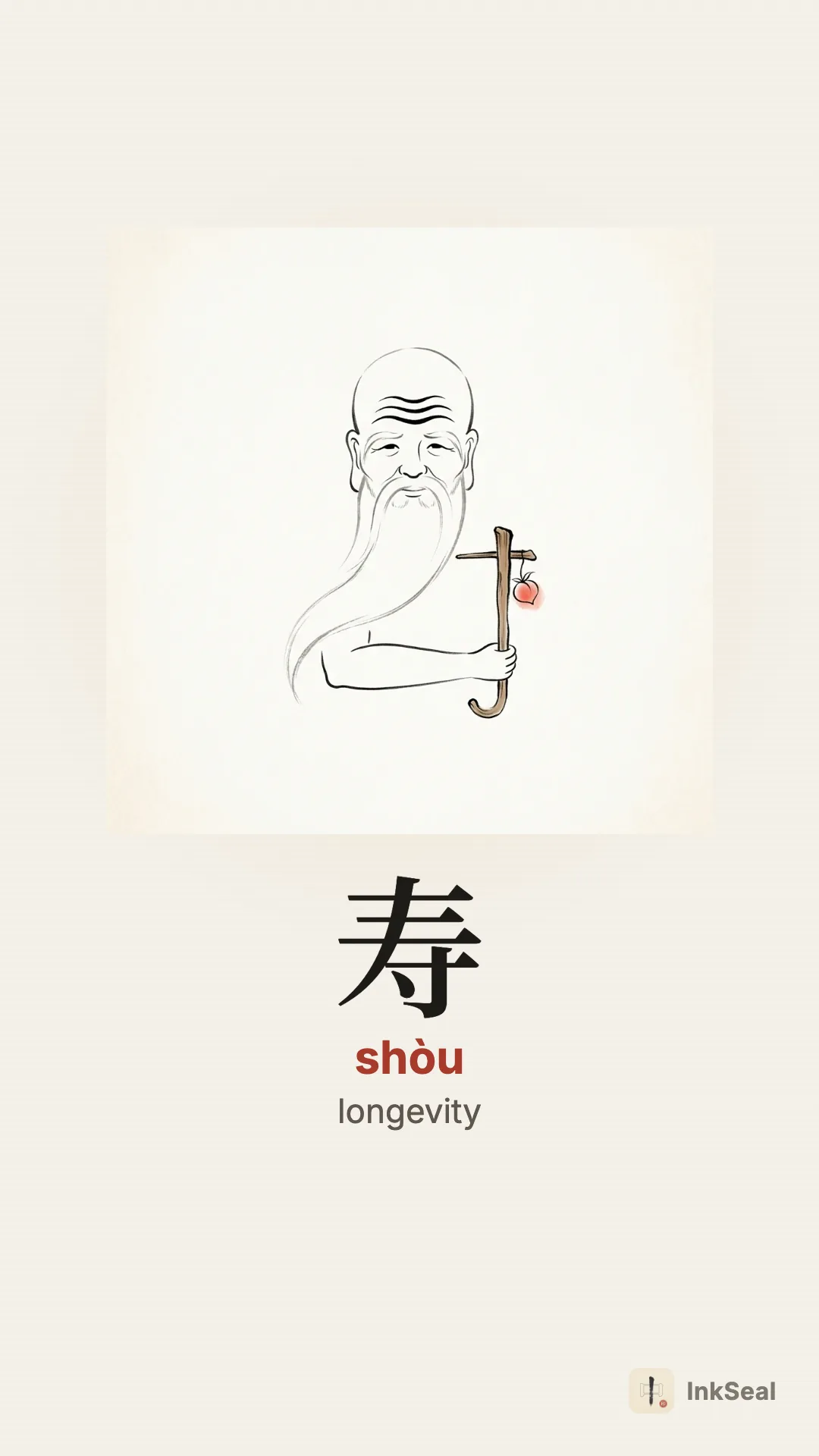
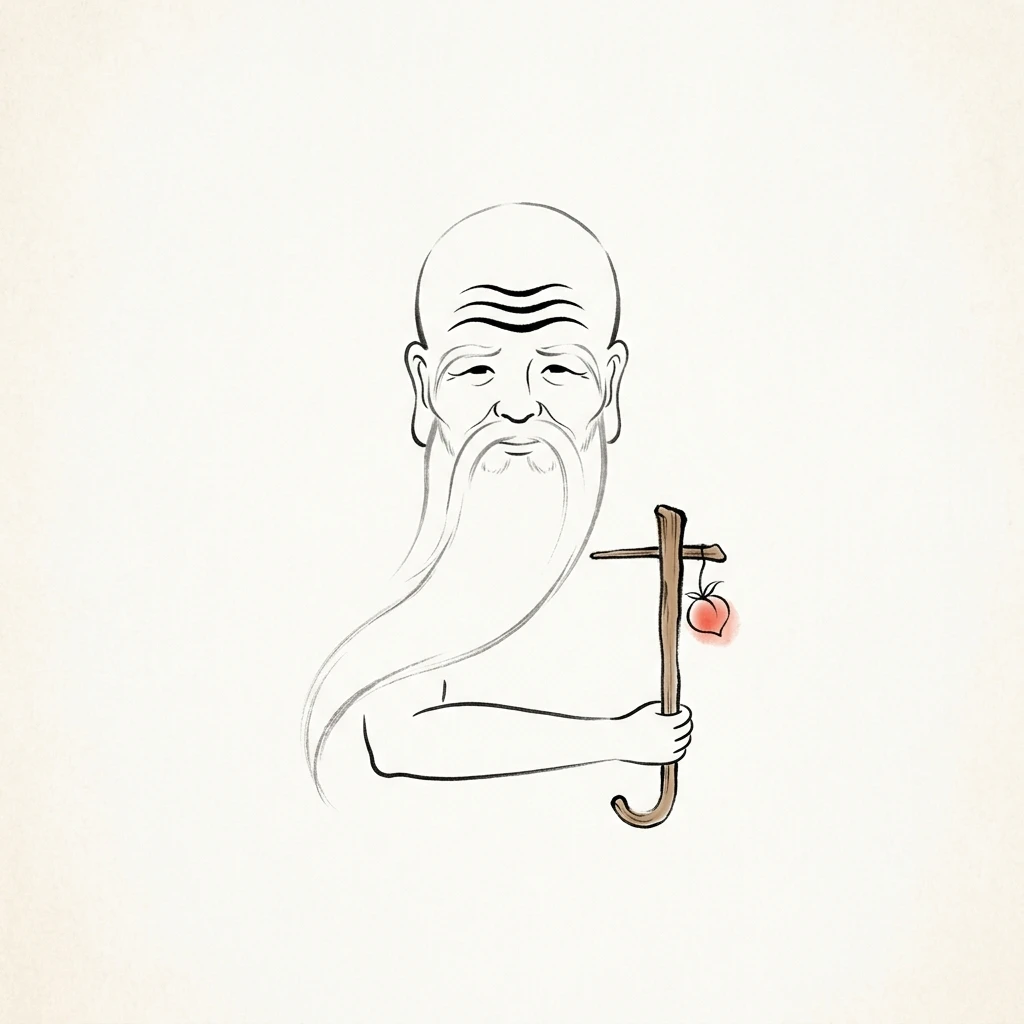
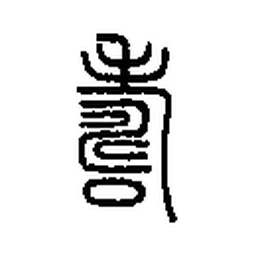
The simplified character visually resembles an ancient sage: the top horizontal lines are his forehead wrinkles, the sweeping diagonal is his long beard, and the bottom '寸' represents his hand holding a walking cane.
Three wrinkles of wisdom, a long sweeping beard, and a hand (寸) holding a cane form the picture of longevity (寿).
Video mnemonic
See the visual story unfold, then connect it to the words and sentences below.
寿 directly conveys long life in 长寿 and lifespan in 寿命, while in 寿司 it represents sound as part of a borrowed food word.
cháng shòu · long-lived; to have a long life
我奶奶很长寿。
My grandmother has a long life.
shòu mìng · lifespan; lifetime
这种电池的寿命很长。
This kind of battery has a long lifespan.
shòu sī · sushi
我们晚上去吃寿司吧。
Let's go eat sushi tonight.
Usage note: Learn 寿司 as one borrowed food word. Here 寿 helps represent the sound rather than its usual long-life meaning.
寿 (shòu, longevity / long life) and 春 (chūn, spring) are one of the classic near-twins for beginners. Both open with stacked horizontal lines over a slanting stroke, and at a glance the top halves look interchangeable. The sounds give no help either — shòu and chūn are completely different — so this is a purely visual trap: if you only register “busy top, something underneath,” you can easily wish someone spring when you meant long life, or the reverse.
Look at the bottom, not the top. 春 finishes with 日 (rì, the sun) — the spring sun warming the ground. 寿 finishes with 寸 (cùn, a hand or measure), the old sage's hand on his cane from this page's picture. Sun at the bottom means spring; a hand at the bottom means long life. You will meet 寿 in 长寿 (cháng shòu, long-lived; to have a long life) — 我奶奶很长寿, “my grandmother has a long life” — and in 寿命 (shòu mìng, lifespan; lifetime).
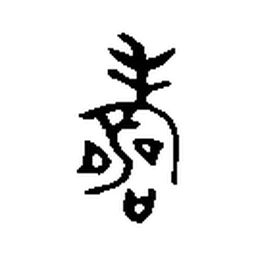
The traditional form '壽' combined '老' (old) and a complex phonetic element. The simplified '寿' elegantly condenses this into an abstract form that visually resembles a bearded elder measuring (寸) his long life.
More characters: 屏 (píng, screen / folding screen) · 春 (chūn, spring) · 渡 (dù, to cross (a river / sea)) — or browse the full character library.