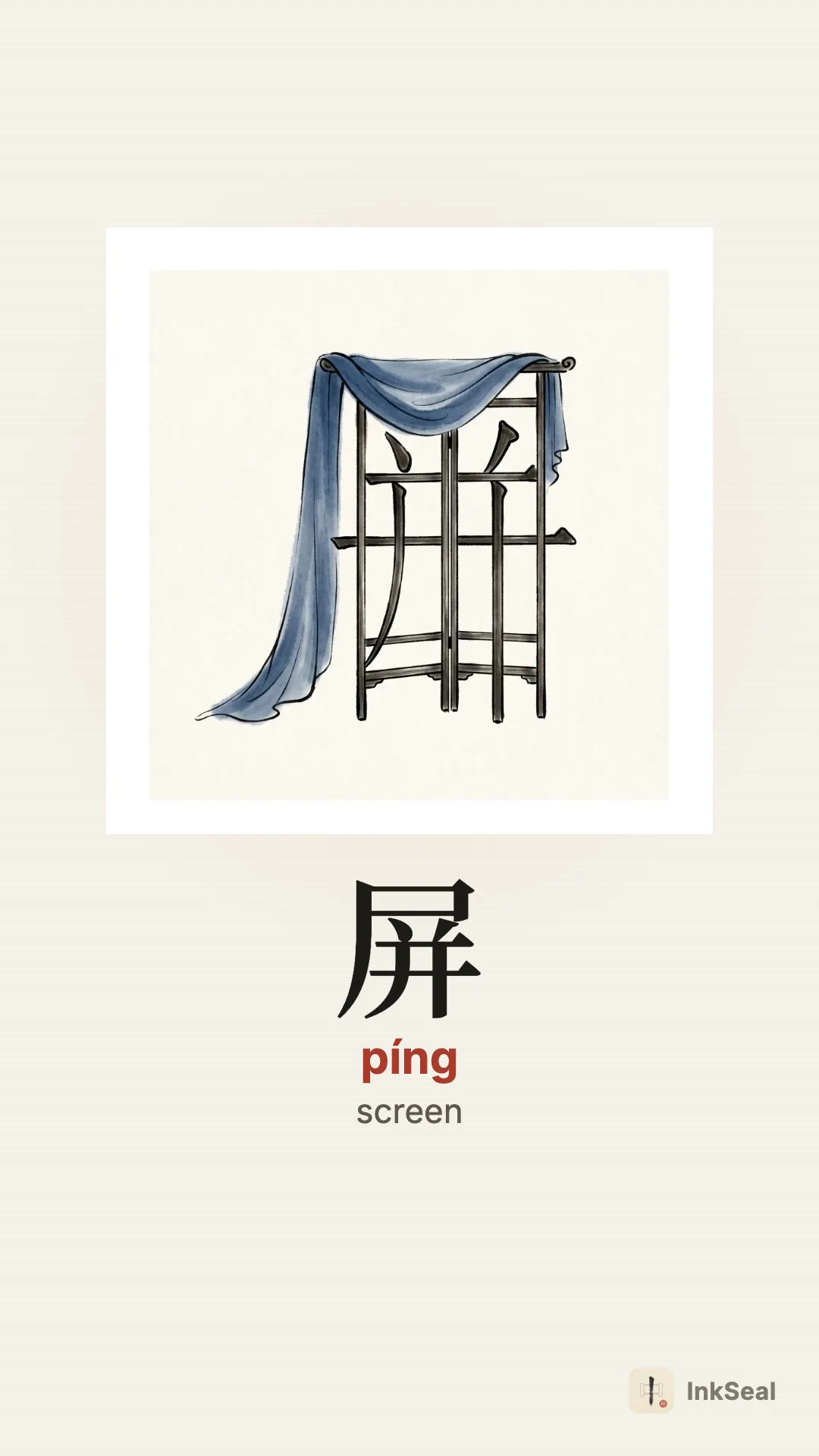
屏风
píng fēng · folding screen; room divider
这个屏风把房间分成了两部分。
This folding screen divides the room into two parts.
 InkSeal
Chinese character · HSK 6
The character combines '尸' (an overhang or covering) with '并' (meaning side-by-side). Visually, it perfectly portrays side-by-side wooden panels acting as a folding screen under a draped silk cover.
Side-by-side (并) panels under a draped cover (尸) make a beautiful folding screen (屏).
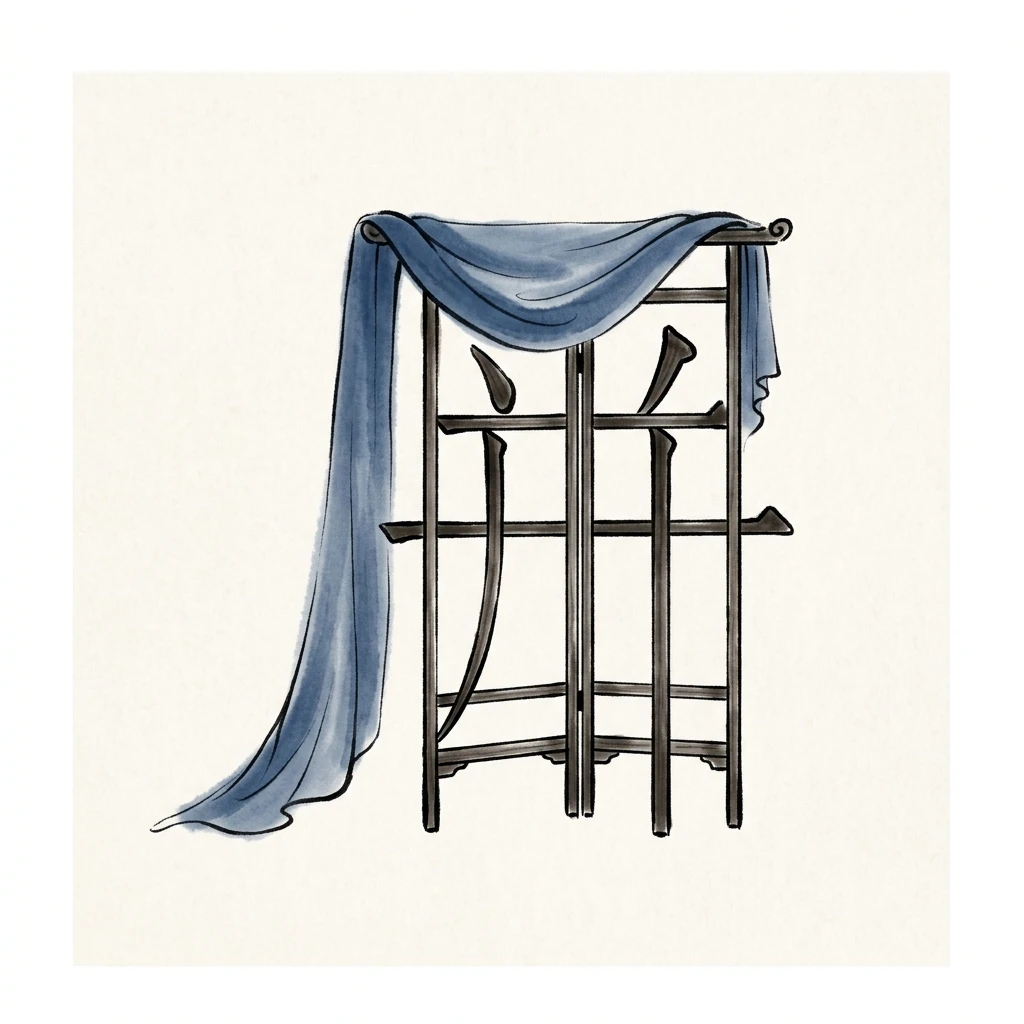
Video mnemonic
See the visual story unfold, then connect it to the words and sentences below.
屏 (píng) refers to both a traditional folding screen and a modern display screen.
píng fēng · folding screen; room divider
这个屏风把房间分成了两部分。
This folding screen divides the room into two parts.
píng mù · screen of a TV, computer, or other device
请看屏幕上的照片。
Please look at the photo on the screen.
A phono-semantic compound. The radical '尸' originally depicted a person but later evolved to represent an overhang, roof, or covering, while '并' (bìng) provides the pronunciation and hints at panels standing side-by-side.
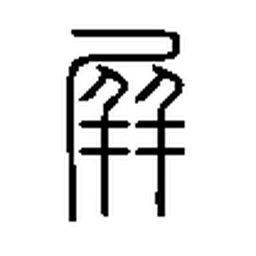
These characters are close enough in shape to misread at speed. Telling them apart is a matter of spotting the one component that differs.
More characters: 春 (chūn, spring) · 渡 (dù, to cross (a river / sea)) · 炒 (chǎo, stir-fry / sauté) — or browse the full character library.