炒菜
chǎo cài · stir-fried dishes; to stir-fry food
我爸爸正在厨房炒菜。
My dad is stir-frying food in the kitchen.
 InkSeal
Chinese character · HSK 6
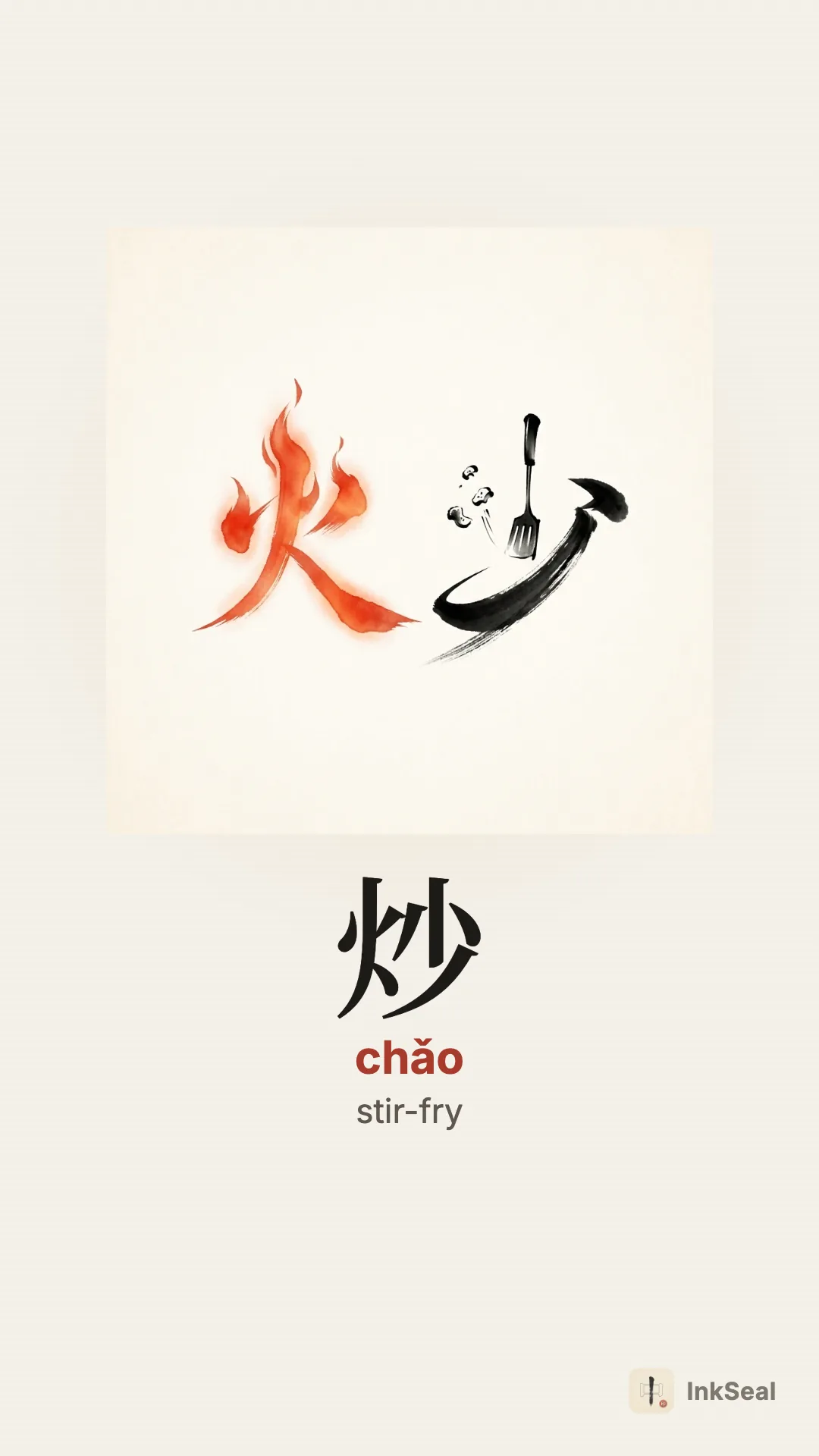
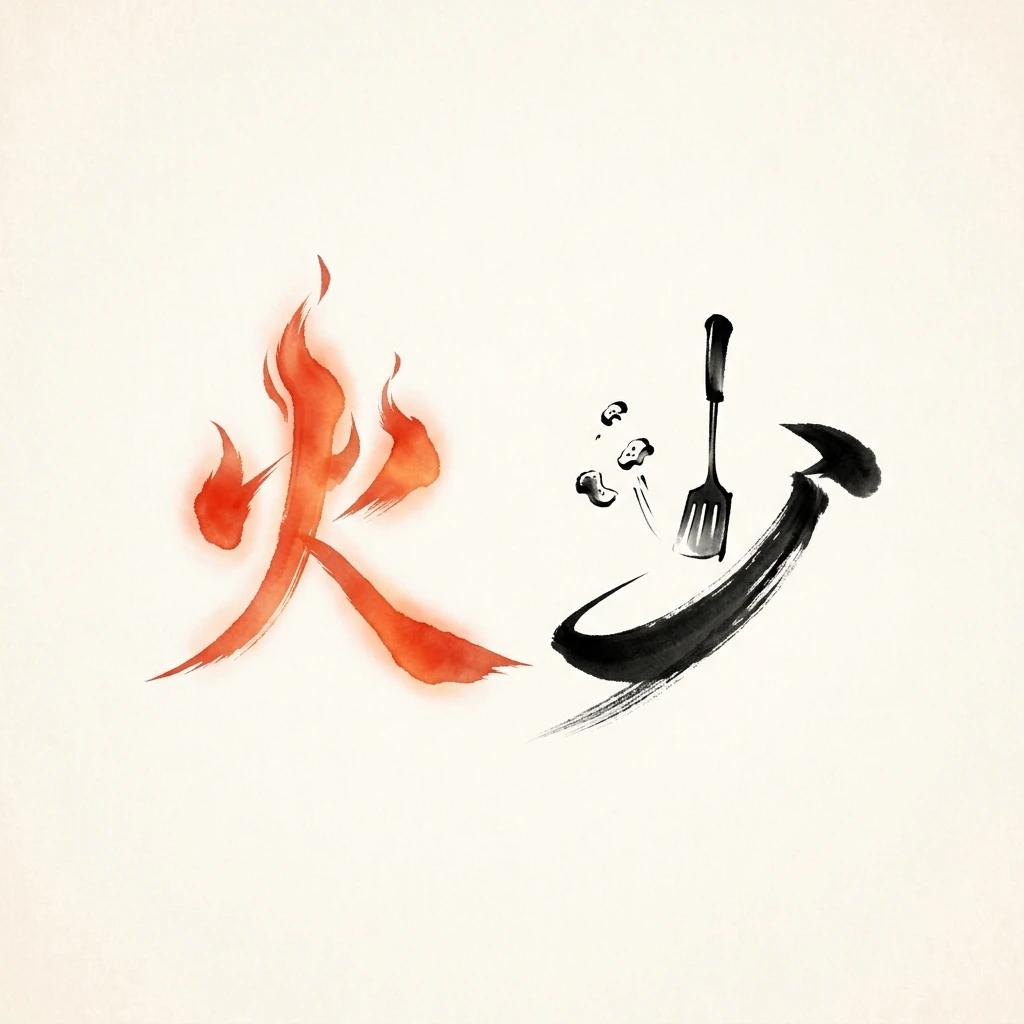
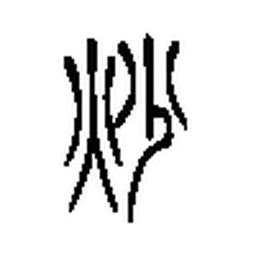
The character combines 'fire' (火) indicating the cooking method, and 'few/little' (少) which provides the pronunciation and visually represents tossing small pieces of food.
To stir-fry, you need a hot FIRE (火) to quickly toss a FEW (少) small pieces of food in a wok.
Video mnemonic
See the visual story unfold, then connect it to the words and sentences below.
炒 directly describes cooking in 炒菜 and 炒饭, while 炒作 and 炒股 extend it into common media and finance vocabulary.
chǎo cài · stir-fried dishes; to stir-fry food
我爸爸正在厨房炒菜。
My dad is stir-frying food in the kitchen.
chǎo fàn · fried rice
我午饭吃了一碗炒饭。
I had a bowl of fried rice for lunch.
chǎo zuò · to hype or promote through publicity
媒体一直在炒作这件事。
The media keeps hyping this matter.
Usage note: Unlike the literal cooking uses, 炒作 refers to generating attention or publicity, often excessively.
chǎo gǔ · to trade or speculate in stocks
他不想靠炒股赚钱。
He does not want to make money by trading stocks.
Usage note: This colloquial term often suggests active trading or speculation, not simply owning shares.
A phono-semantic compound where 火 (fire) provides the semantic context of cooking, and 少 (shǎo) provides the phonetic sound.
More characters: 狗 (gǒu, dog) · 画 (huà, to draw / picture) · 看 (kàn, to look / to see) — or browse the full character library.