小狗
xiǎo gǒu · puppy; little dog
他有一只小狗。
He has a puppy.
 InkSeal
Chinese character · HSK 2
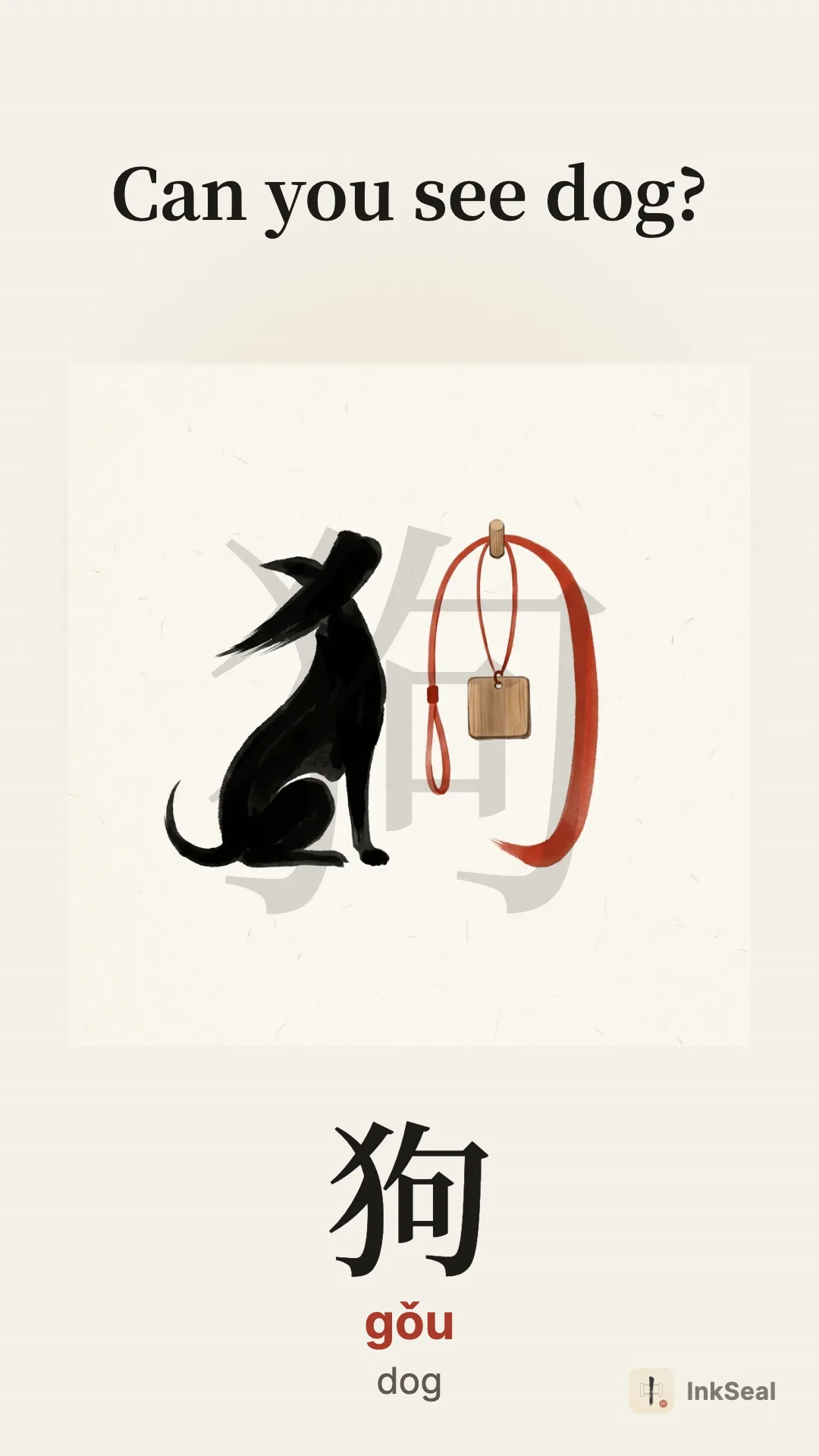
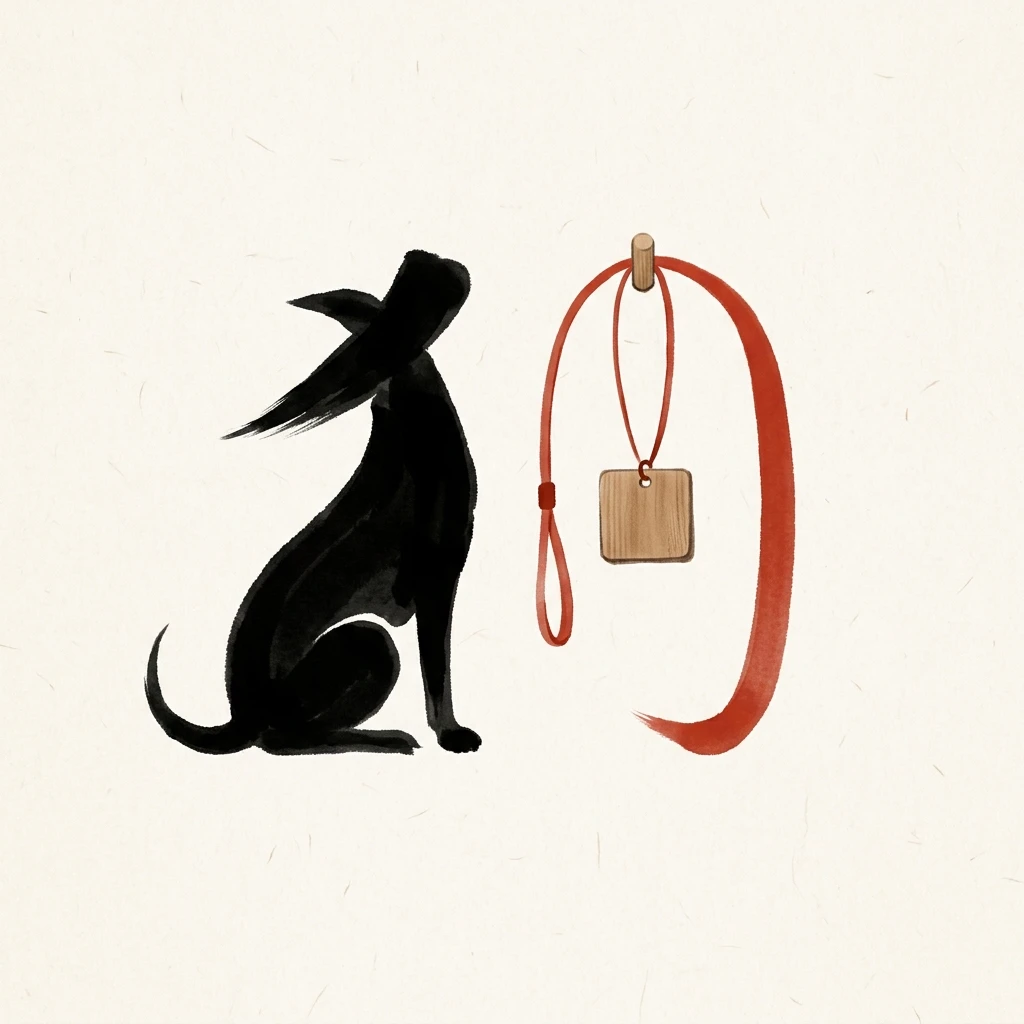
The left radical '犭' indicates it's an animal, while the right component '句' (historically providing the sound) is visually reimagined as the dog's hanging leash and square name tag.
The loyal dog (犭) sits patiently beside its hanging curved leash and square tag (句), waiting for a walk.
Video mnemonic
See the visual story unfold, then connect it to the words and sentences below.
狗 means “dog” directly in 小狗, but in 热狗 the whole word names the food “hot dog.”
xiǎo gǒu · puppy; little dog
他有一只小狗。
He has a puppy.
rè gǒu · hot dog
我午饭吃了一个热狗。
I had a hot dog for lunch.
Usage note: Despite 狗, 热狗 names a food, not a kind of dog.
狗 (gǒu, dog) and 猫 (māo, cat) wear the same radical: 犭, the beast sign, tells you “four-legged animal” and nothing more. The right side names the animal — by sound. 狗 is 犭 + 句 (jù, whose sound bends to gǒu), and 猫 is 犭 + 苗 (miáo, whose sound bends to māo). So the recipe for the whole animal shelf is: radical for the family, right side for the name. Learn one and the other comes nearly free.
You will meet 狗 most often in 小狗 (xiǎo gǒu, a puppy or little dog) — and in 热狗 (rè gǒu), which is exactly what it looks like: a “hot dog.” Chinese simply translated the English word piece by piece, hot and dog. Next time a menu offers you a 热狗, you will know precisely which half of this pair you are looking at.
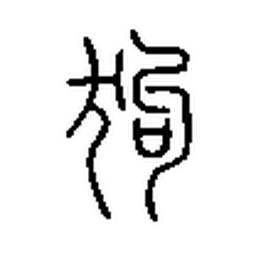
A phono-semantic compound where '犭' (a variant of 犬, dog) provides the meaning, and '句' provides the historical pronunciation.

These characters are close enough in shape to misread at speed. Telling them apart is a matter of spotting the one component that differs.
More characters: 画 (huà, to draw / picture) · 看 (kàn, to look / to see) · 竹 (zhú, bamboo) — or browse the full character library.