渡过
dù guò · to cross; to get through
小船安全地渡过了这条河。
The small boat crossed the river safely.
 InkSeal
Chinese character · HSK 6
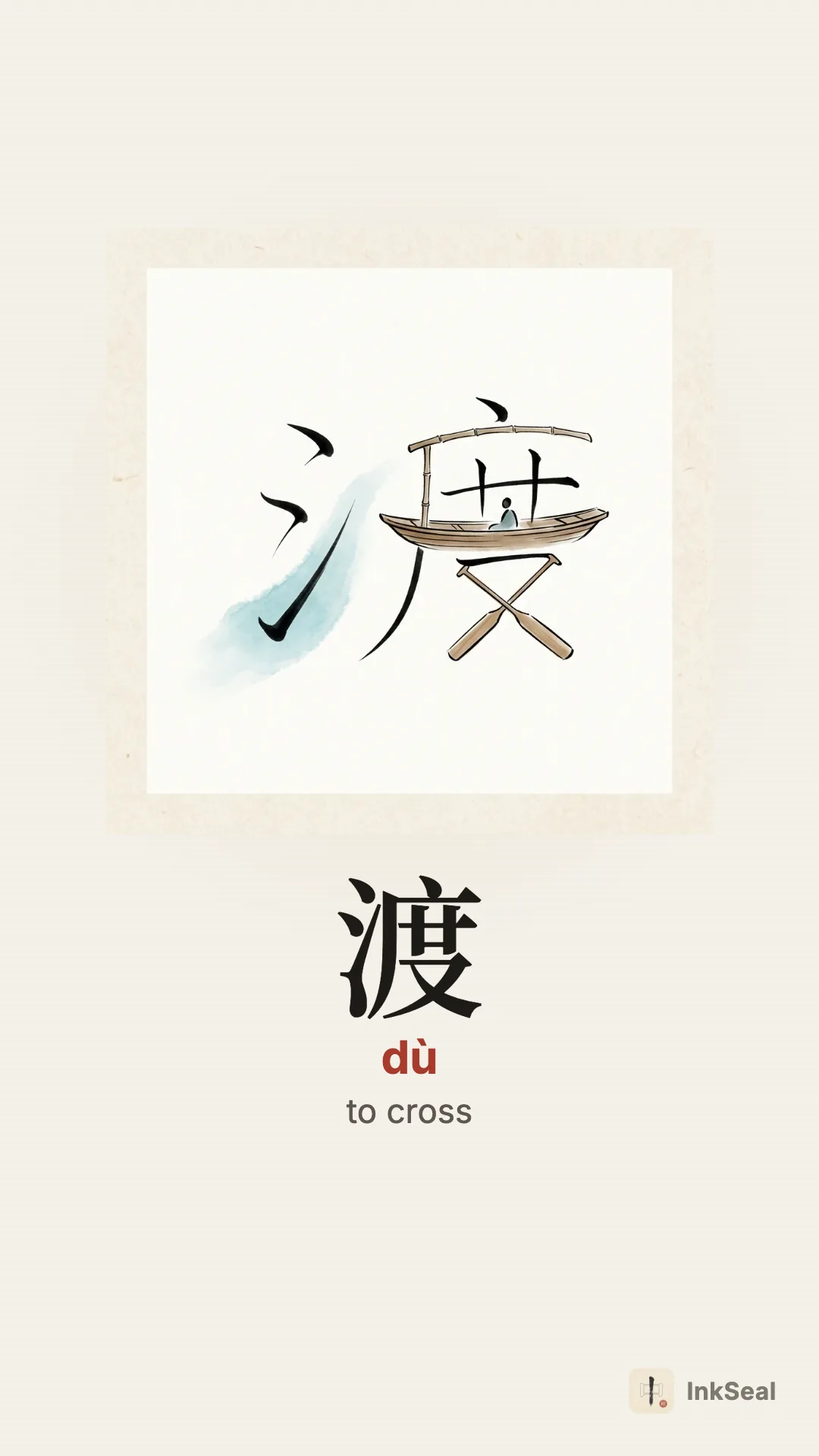
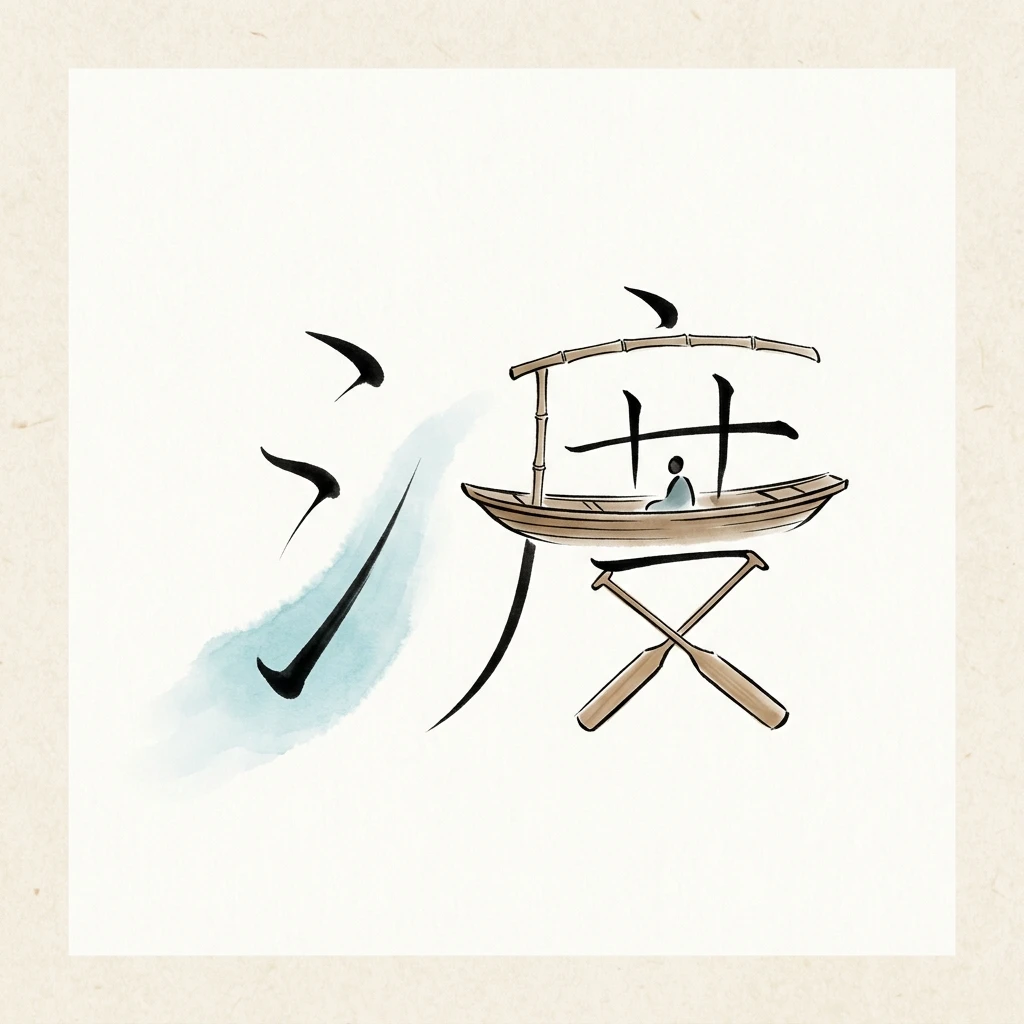
The water radical '氵' signifies the river, while the phonetic component '度' is visually transformed into a ferry boat with a canopy (广), a passenger (廿), and crossed oars (又), representing the act of crossing.
Cross the water (氵) in a ferry boat with a canopy (广) and crossed oars (又) to safely reach the other shore.
Video mnemonic
See the visual story unfold, then connect it to the words and sentences below.
渡 (dù) can describe physically crossing water, a place for crossing, or a figurative transition between stages.
dù guò · to cross; to get through
小船安全地渡过了这条河。
The small boat crossed the river safely.
dù kǒu · ferry crossing; ferry landing
村子旁边有一个渡口。
There is a ferry crossing beside the village.
Usage note: Think of this as the place where people cross the water.
guò dù · transition; to transition
这个计划需要一个过渡阶段。
This plan needs a transitional stage.
Usage note: 过渡 is a transition between states; do not confuse it with 渡过, which means to cross or get through something.
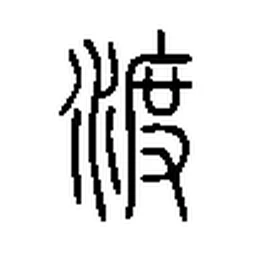
A phono-semantic compound: water (氵) provides the semantic meaning of crossing a body of water, while 度 (dù) provides the pronunciation.
More characters: 炒 (chǎo, stir-fry / sauté) · 狗 (gǒu, dog) · 画 (huà, to draw / picture) — or browse the full character library.