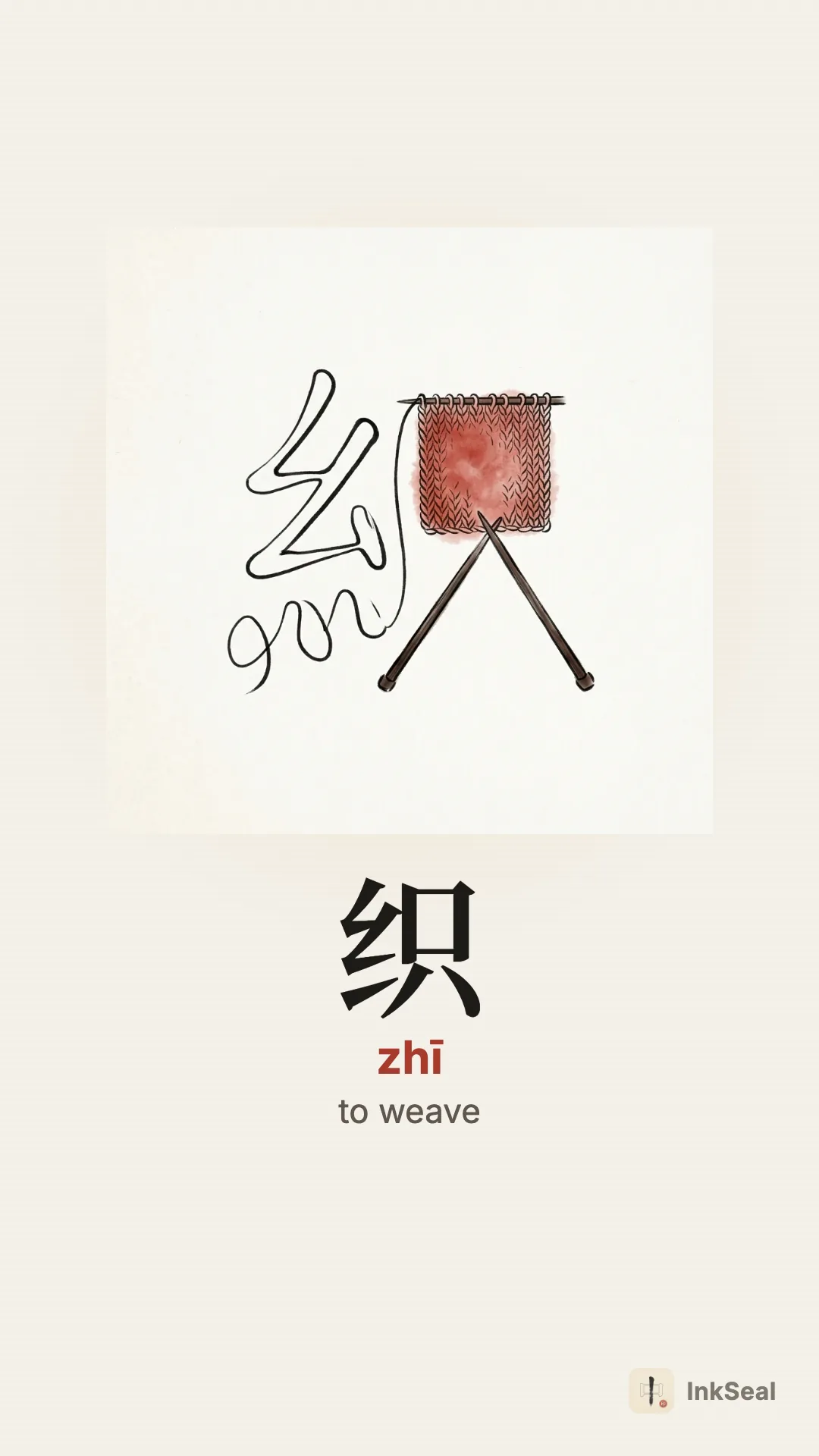
织布
zhī bù · to weave cloth
她每天在家织布。
She weaves cloth at home every day.
 InkSeal
Chinese character · HSK 5
The left '纟' (silk) signifies thread, while the right '只' provides the sound; visually, '只' perfectly resembles a square swatch of fabric ('口') being worked by two downward-pointing knitting needles ('八').
Take the SILK thread (纟) and use two NEEDLES (八) to knit a SQUARE of fabric (口).
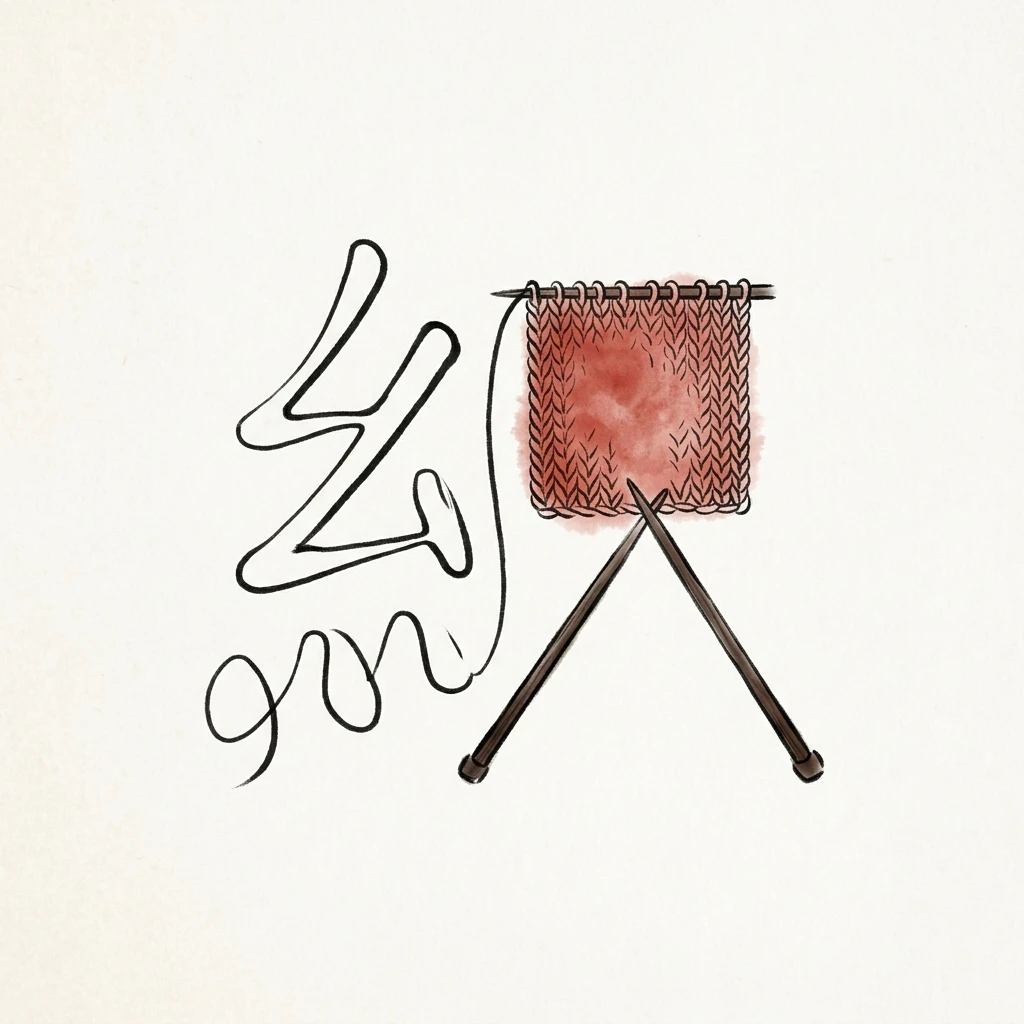
Video mnemonic
See the visual story unfold, then connect it to the words and sentences below.
织 is used literally for making cloth or knitted items, and it extends to arranging separate parts into an organized whole.
zhī bù · to weave cloth
她每天在家织布。
She weaves cloth at home every day.
biān zhī · to weave or knit
奶奶正在编织一条围巾。
Grandma is knitting a scarf.
zǔ zhī · to organize; to arrange parts into a whole
我们需要组织一次会议。
We need to organize a meeting.
Usage note: Picture separate people or tasks being woven into one working whole.
A phono-semantic compound (形声字). The left radical 纟 (silk/thread) indicates the meaning related to textiles, while the right component 只 (simplified from 隻) provides the pronunciation.
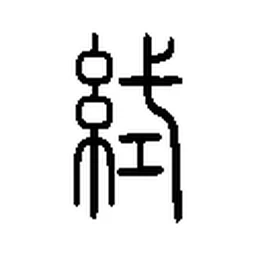
These characters are close enough in shape to misread at speed. Telling them apart is a matter of spotting the one component that differs.
More characters: 给 (gěi, to give / to) · 罪 (zuì, sin / crime) · 西 (xī, west) — or browse the full character library.