支付
zhī fù · to pay
我用手机支付车费。
I use my phone to pay the fare.
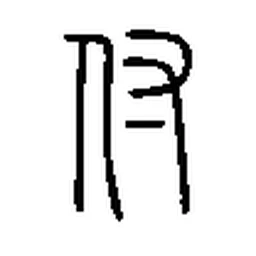
 InkSeal
Chinese character · HSK 3
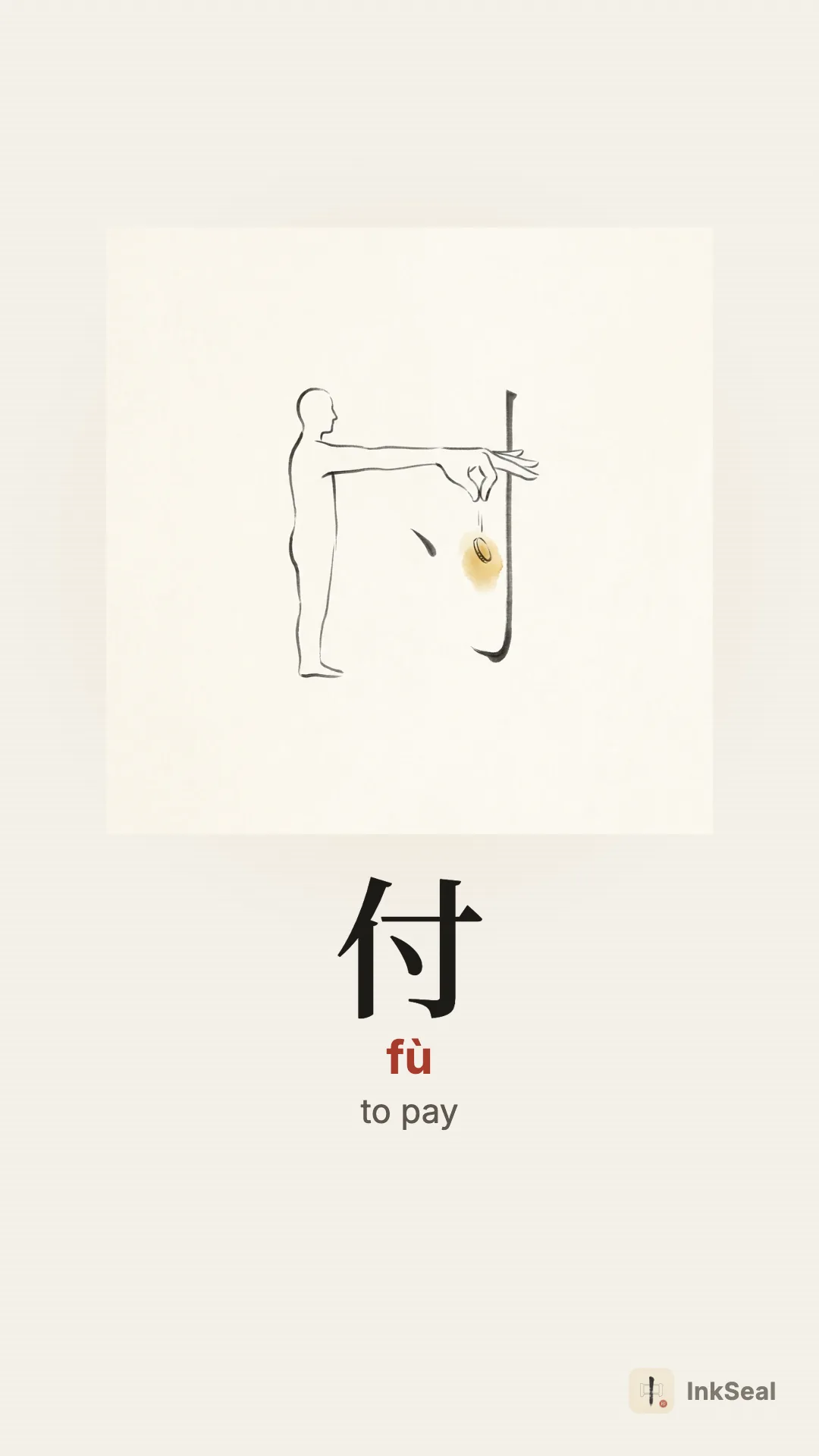
An ideogram combining a person (亻) and a hand (寸), symbolizing a person extending their hand to give or pay something to another.
A person (亻) extends their hand (寸) to drop a gold coin and PAY.
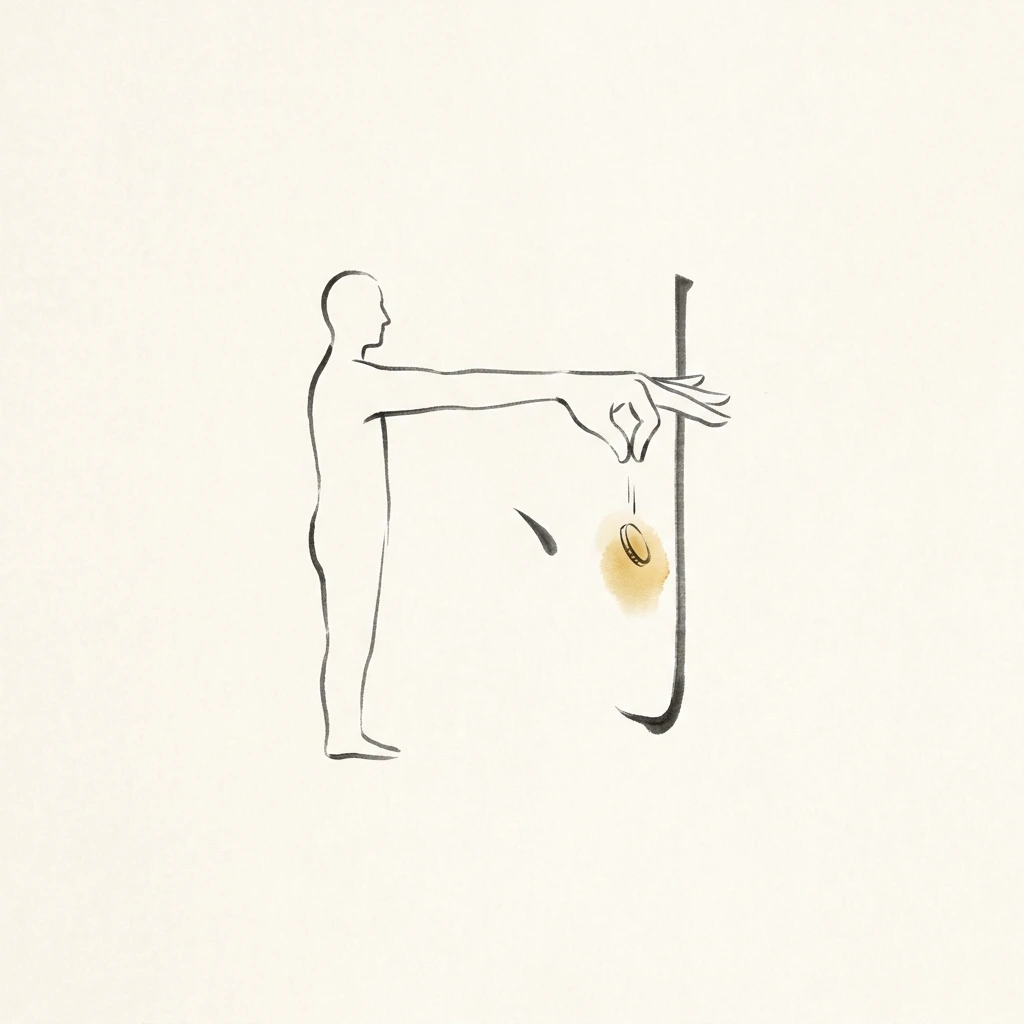
Video mnemonic
See the visual story unfold, then connect it to the words and sentences below.
付 is read fù in words about paying, handing something over, or expending effort; in 对付 and 应付 it is usually unstressed as fu in lexicalized “deal with” meanings.
zhī fù · to pay
我用手机支付车费。
I use my phone to pay the fare.
jiāo fù · to deliver or hand over
公司明天交付新电脑。
The company will deliver the new computers tomorrow.
fù chū · to expend or invest
学好中文需要付出时间和努力。
Learning Chinese well requires investing time and effort.
duì fu · to deal with or tackle someone or something
这个问题很难对付。
This problem is difficult to deal with.
Usage note: Learn 对付 as a unit rather than interpreting each character separately. Here 付 is normally unstressed and pronounced fu, not full-tone fù.
yìng fu · to deal with or cope with a situation
这些工作我能应付。
I can handle this work.
Usage note: 应付 often emphasizes being able to cope with demands or a situation. Here 付 is normally unstressed and pronounced fu.
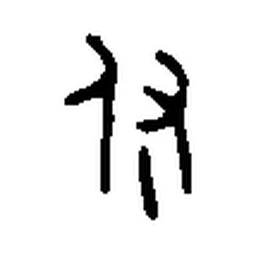
An associative compound (会意字). In oracle bone script, it depicted a person handing an object over to someone else, with '寸' representing the hand.
These characters are close enough in shape to misread at speed. Telling them apart is a matter of spotting the one component that differs.
More characters: 任 (rèn, to appoint / responsibility) · 休 (xiū, to rest) · 伞 (sǎn, umbrella) — or browse the full character library.